
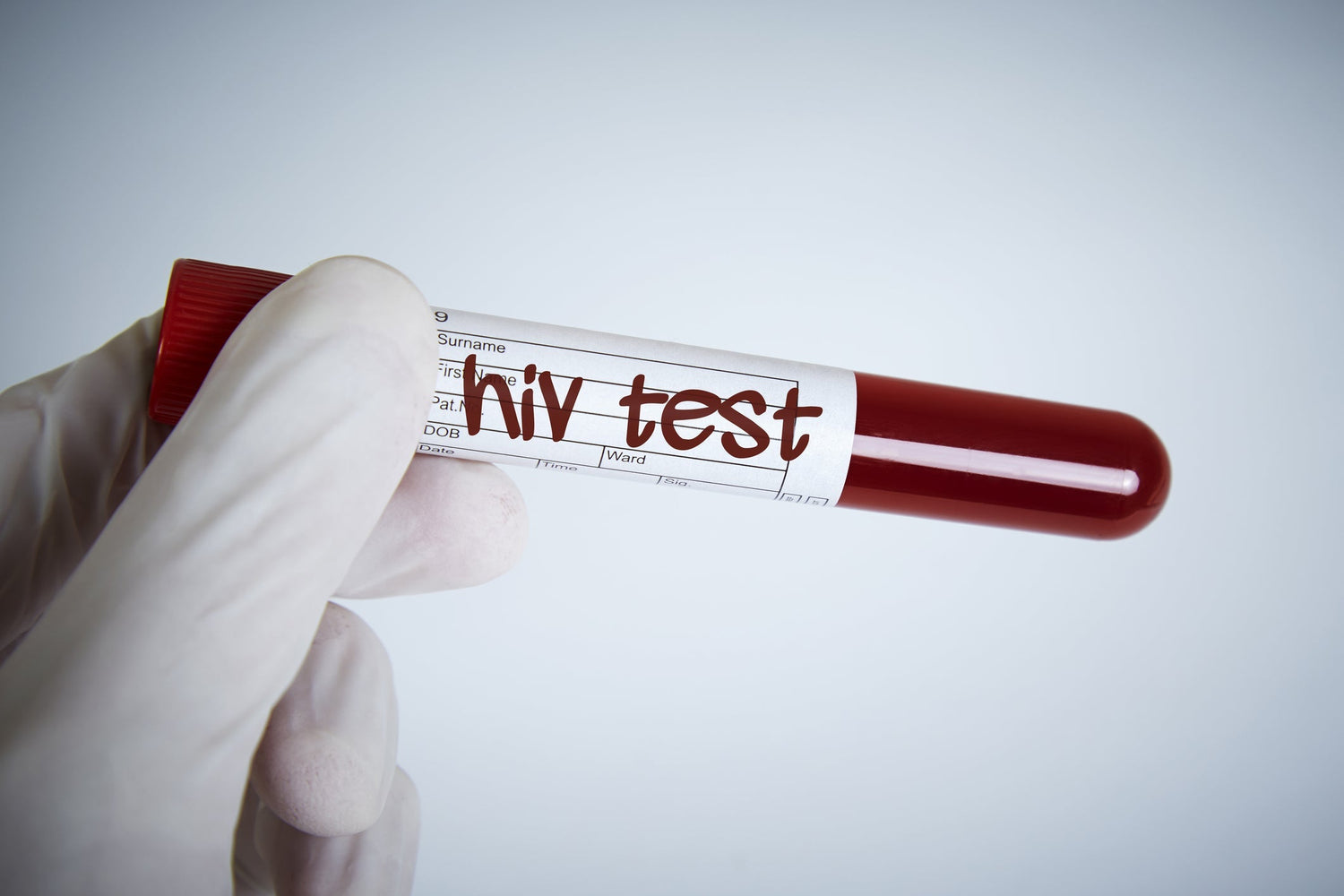
HIV tests are a decisive step for many people in the direction of health and safety. In a world where awareness of sexually transmitted diseases is constantly growing, many may wonder how they can protect their own health. health effectively.
A HIV test can not only provide clarity about your own state of health, but also enable timely measures and treatment options. The self-tests are a practical and often less stressful method of carrying out a test in the privacy of your own home.
In this article, we will explore different testing methods and how they work to give you helpful tips on how to carry out a HIV test at home.
HIV test
A HIV test is a procedure to find out whether someone is infected with the human immunodeficiency virus (HIV). The tests can be carried out on different types of samples such as serum, plasma, saliva or urine and detect antigens or antibodies against HIV.
Types of HIV tests:
- Specialist tests: These are carried out in health authorities or doctors' surgeries by trained personnel. A well-known example is the combo ELISA test, which detects both antibodies and the p24 antigen of the virus.
- HIV self-tests: Since October 2018 in Germany self-tests have been available. They can be obtained without a prescription in pharmacies purchased in pharmacies.
HIV tests are important to prevent the spread of the virus and to start treatment immediately if the test result is positive. Just one drop of blood is often enough to confirm or rule out a suspected infection.
Advantages of HIV tests:
- Early detection of the infection
- Rapid medical intervention
- Reduction of the risk of passing on the virus
HIV tests are an important step in combating the disease and should be carried out regularly in the event of sexual risks or after probable exposure.
Introduction
A HIV test is an important medical examination that serves to detect an infection with the HI virus. In Germany, since October 2018 HIV self-tests over the counter in pharmacies so that they can be carried out conveniently at home. In addition to antibody tests, such as the well-known ELISA test, which specifically detects antibodies against the HI virus in the blood, there is also the HIV combination test. This combo ELISA is able to detect both the antibodies and the p24 antigen of the viral envelope, which enables earlier detection of an infection.
Another test method is the PCR test, which can directly detect the virus itself. This makes the PCR test particularly valuable as a confirmatory test if an antibody test has shown a positive result. A major advantage of the PCR test is its ability to detect an infection as early as two weeks after a risk contact. These sensitive measurement methods make the detection of an HIV infection safer and faster. The Deutsche AIDS-Hilfe and the Robert Koch Institute recommend the use of such tests in order to prevent sexual health and safety.
Why are HIV tests important?
HIV tests are crucial for detecting a possible infection with the HI virus. The earlier an infection is detected, the better the chances of successful treatment. These tests provide clarity about the state of health and help to make responsible decisions about sexual behavior and health management. The different test procedures require different waiting times. The correct timing of the test is therefore important to rule out an infection with certainty. A positive test must always be backed up by a confirmatory test to confirm the diagnosis.

Timely measures and treatment options
Early treatment for HIV infection improves the health and prevents the virus from being passed on. Regular or ad hoc testing is crucial, as HIV often remains without symptoms for years. In Germany, people with HIV are well cared for, especially by specialized doctors in larger cities. Successful antiretroviral therapy (ART) can reduce the viral load to such an extent that it is no longer detectable and therefore cannot be transmitted. After the acute infection phase, the detection of specific antibodies can sometimes be the only indication of an ongoing HIV infection.
Recommended groups of people for regular HIV tests:
- Persons with HIV-positive partners
- Men who have sex with men
- People with changing sexual partners in the last 12 months
Important points about the treatment option:
- Early treatment is beneficial.
- Specialized medical care is available in Germany.
- Successful ART reduces the risk of infection to practically zero.
Test methods
HIV tests are important to check a person's state of health. The most common tests are antibody screening tests. They look for antibodies that the body produces against the HIV virus virus. They are therefore not looking directly for the virus itself.
Self-tests
A HIV self-test is a simple test that you can do at home. A drop of blood from the fingertip is usually required. These tests have been permitted in Germany since 29.09.2018. They must have a CE mark to be safe and reliable. The result is available in around 15 minutes. It is important to note that false positive results can occur. If in doubt, a specialist should confirm the result.
Immunoassays
Immunoassays help with this, HIV in the body. One important test is the Combo ELISA. This test can detect both antibodies and the p24 antigen. If the test is positive, the Western blot method is usually used to confirm the result. In the Western blot test, various HIVproteins are tested to find specific antibodies in the patient's blood.
Preparation for the test
A HIV test should ideally be carried out by a specialized doctor. This will ensure an accurate diagnosis. Before the test, it is helpful to think about your fears and worries. Many people have inhibitions about talking about their sexual risk contacts. You can have a HIV self-test in pharmaciesdrugstores or online. Alternatively, there are send-in tests where the sample is taken at home and sent for laboratory analysis. HIV screening tests should be carried out at the earliest two to six weeks after a possible risk contact. A negative result should be repeated after three months. A personal consultation before the test is important to clarify all relevant information and discuss any questions.
Questions about the procedure
A HIV test is a laboratory test to detect an infection with HIV. It can be done in serum, plasma, saliva or urine. The widely used HIV screening test, the Combo ELISA, detects both patient antibodies and the p24 antigen of the virus. Tests can be carried out by specialist staff in health authorities and doctors' surgeries or as a self-tests from pharmacies for use at home. Usually a screening test is done first, followed by a confirmation test to validate the results. For higher risk groups, such as people with HIV-positive partners and men who have sex with men, regular testing is recommended.
|
Test method |
Test characteristics |
|---|---|
|
Combo ELISA |
Detection of antibodies and p24 antigen |
|
Result in 15 minutes, easy to use at home |
|
|
Confirmation test |
Supplements the search test if the result is positive |
These tests are important for health and prevention of HIV. They enable rapid diagnosis and treatment planning.
Evaluation of the test results
HIV can be detected by serological screening and the direct detection of HIV nucleic acid. These tests are often carried out in medical diagnostic laboratories. A HIV rapid test can provide results within about 15 minutes. However, rapid tests are less accurate than laboratory tests. It is therefore possible that they can lead to false positive results.
As a rule, serological screening takes around 6 to 12 weeks to provide a reliable assessment. 4th generation immunoassays can detect the p24 antigen in the blood. This helps to shorten the diagnostic gap between infection and antibody formation. If an immunoassay is positive, a confirmatory test must be performed. This is carried out using the Western blot method.
What to do if the results are positive?
A positive result in a HIV self-test does not automatically mean an infection. Cross-reactions can falsify the results. A confirmation test is therefore essential. This can be done by a doctor or anonymously at a public health department.
A positive test result can trigger a variety of feelings. It is important to take the necessary time to come to terms with the situation. In Germany, medical care for HIV-positive people is excellent. They can live well if they take their medication regularly.
Understanding negative results
A negative test result is not certain if the risk of exposure was less than 3 months ago. A doctor should therefore be consulted if there is any uncertainty. After 12 weeks, the negative result can be considered safe.
If the test was taken too early, the result could be false negative. It is important to take a second blood sample 12 weeks after the risk contact. A HIV rapid test offers results within 30 minutes. But here too, reliability depends on adherence to the waiting time.
Legal framework conditions
The implementation of HIV tests is strictly regulated in Germany. According to the ordinance on quality control and quality assurance in HIV diagnostics, testers must adhere to certain guidelines. One HIV test may only be carried out with the knowledge and consent of the patient. This consent is part of the treatment contract. Breastfeeding consent is only legally permitted if it is necessary for medical reasons.
After a possible HIV risk contact, it is important to clarify the HIV status. A negative test result should be checked again after three months. This retesting is important in legal practice.
Data protection and anonymity
The autotest VIH® can be carried out anonymously without a prescription or ID. This protects the privacy of the user. AIDS-Hilfe Steiermark does not issue written results in order to maintain confidentiality.
All confirmed positive HIV tests must be reported anonymously to the Robert Koch Institute. This ensures data protection and information security. Case-related encryption is used to ensure the anonymity of the test subjects. This also avoids the risk of multiple reports.
Employees in medical facilities are subject to a duty of confidentiality. This reinforces the confidentiality of the test results and protects the personal data of those tested.
Data protection and anonymity
Data protection and anonymity play a central role in HIV tests. The autotest VIH® can be carried out anonymously without the need for a prescription or ID. This protects the privacy of users. For data protection reasons, AIDS-Hilfe Steiermark does not issue written results in order to protect the confidentiality of the test results.
A confirmed positive HIV test must be reported anonymously to the Robert Koch Institute. This ensures data protection and information security. In order to avoid multiple reports from the same person, the anonymity of the test persons is ensured by case-related encryption.
Important points:
- No prescription or identification required
- No written findings by AIDS-Hilfe Steiermark
- Anonymous reporting of positive tests to the Robert Koch Institute
- Case-related coding to avoid multiple reports
The HIV test result is subject to the medical staff's duty of confidentiality. This further strengthens the confidentiality of the test results. Data protection and anonymity are therefore guaranteed and essential for the responsible handling of HIV testing.
Regular tests and risk groups
Certain groups should be tested regularly for HIV testing regularly. These include people whose partners are HIV-positive. They have a higher risk of infection. Men who have sex with men also belong to the risk group. This group is particularly advised to undergo regular testing.
People with changing sexual partners in the last 12 months should be tested more frequently in order to detect an infection at an early stage. Prostitutes and people who inject drugs also belong to the risk groups. Their risk of infection is increased due to their lifestyle.
People from regions with a high HIV prevalence should also be tested. These include sub-Saharan Africa and the Caribbean in particular. Regular tests help to detect a possible infection at an early stage.

Recommended testing frequency
The HIV test is important if there is a risk of infection. It is particularly advisable after unprotected sexual intercourse with an HIV-infected person.
There are various test methods. Combined antibody-antigen screening tests usually detect an HIV infection after 6 weeks at the latest. Antibody screening tests and rapid tests can be positive after 12 weeks.
After 6 weeks, antibodies are detectable in about 80% of cases. After 8 weeks it is almost 95%, and after 12 weeks almost all those affected have formed HIV antibodies. A negative test result is only reliable if the test was taken at least 12 weeks after a possible infection.
If the result is positive, a confirmatory test should always be carried out in the laboratory. This confirms the diagnosis.
Frequently asked questions about HIV transmission
HIV is mainly transmitted through unprotected sexual contact. The risk is higher if the HIV status of the sexual partner is unknown or if the partner is HIV-positive. It is recommended that people with changing sexual partners, men who have sex with men and people from high-prevalence regions are regularly tested for HIV. HIV tested are tested regularly. A HIV test can be carried out as early as 14 days after a risk situation in order to obtain meaningful results. These tests usually include serological screening and confirmatory diagnostics.
Routes of transmission
HIV can be transmitted at various points in the body. During sexual intercourse, the virus can be transmitted via the urethra into the vagina or throat. Anal intercourse can transmit the virus between the rectum and urethra urethra. Transmission is also possible during oral sex. The risk increases when spit is used as a lubricant, as pathogens can be spread. In group sex situations, it can be transmitted through inadequately changed condoms or contaminated sex toys can lead to transmission. Preventive measures such as condoms can significantly reduce the risk.
Myth and reality
Some myths about HIV spread a false sense of security. Dried blood can be a risk if it comes into contact with open wounds. Skin contact with inactivated HIV poses no risk, even if the skin is injured. skin. It is important to know that the virus is inactivated outside the body, it does not "die". The time between infection and detectability of antibodies varies from person to person. HIV tests are not only used for suspicion, but also as a preventive measure for risk groups.
Protective measures against HIV infection
Protective measures against HIV infections are crucial to stopping the epidemic. Education about the risks of infection is the most effective measure to prevent new infections. People who are already living with HIV should be informed about behaviors that prevent transmission. This is particularly important as long as the viral load is above the detection limit.
Important protective measures:
- Condoms useIn group sex situations, a new condom should be used for each partner. This significantly reduces the risk of transmission.
- Take PrEPThe combination of PrEP (pre-exposure prophylaxis) and condoms offers excellent protection.
- Regular tests: Frequent testing for HIV and other sexually transmitted diseases is important. They allow early detection and protect the health of all those involved.
|
Measure |
Description |
|---|---|
|
PrEP |
Drug prevention against HIV |
|
Barrier against infections |
|
|
Early detection of infections |
These protective measures are essential to protect your own health and that of their partners.
Source: istockphoto atakan
0 Comments