
Medical Tweezers
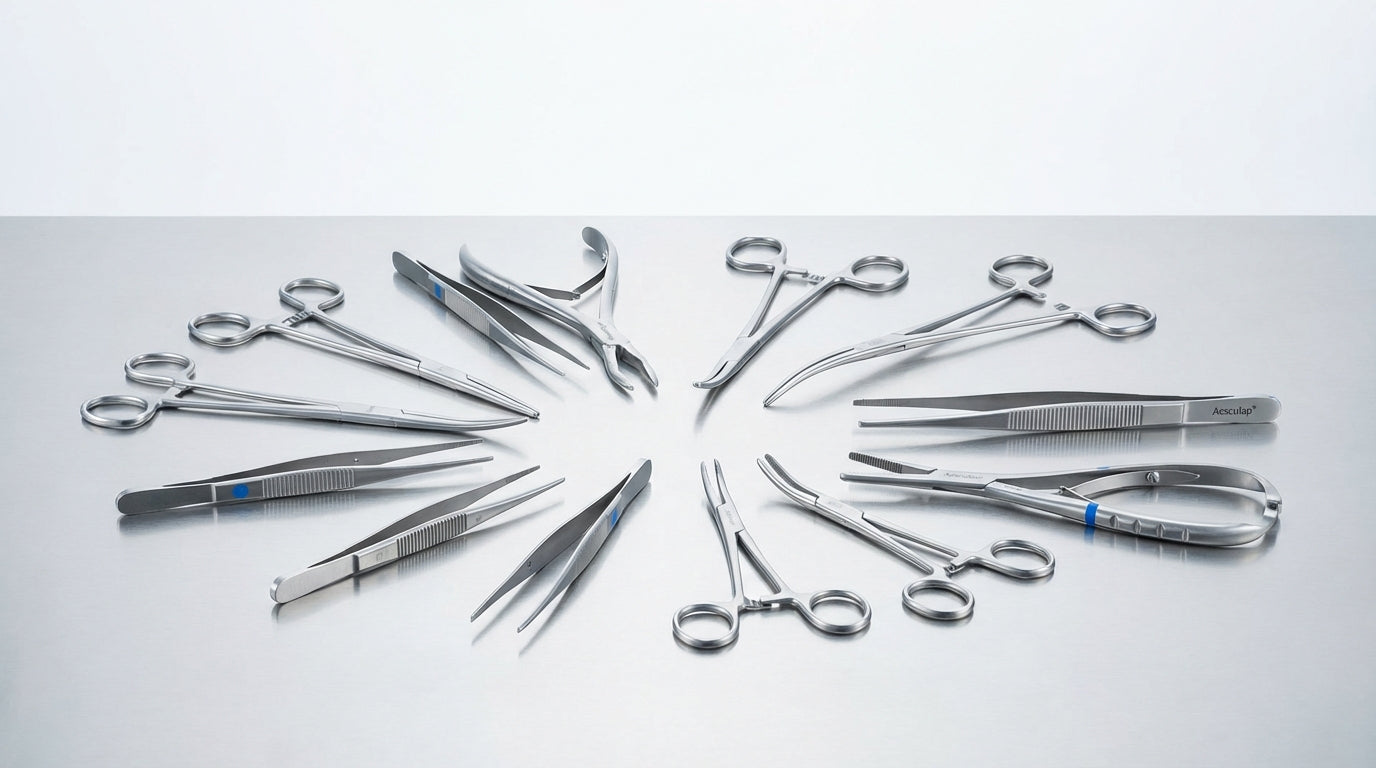
Medical forceps include precise grasping, clamping, and tweezer instruments for the secure manipulation of materials and tissues. They support diagnostics, treatment, and organizational processes through ergonomic handling, durable materials, and easy sterilization.
0 Products
filterNo products found
Use fewer filters or delete all of them
Medical forceps
Areas of use and application areas
Medical forceps are used in a variety of situations: during examinations, for hemostasis and tissue handling, for wound care, in sterile care and for instrument and material organization. Their areas of application range from precise diagnostics and manipulation tasks to support with simple therapeutic interventions and hygiene measures.
Product types and designs
The category includes a variety of styles, including anatomical and surgical forceps, pocket and tweezer styles, fine-tipped forceps, and serrated or straight-edge forceps. Typical product types are:
- Tweezers and fine forceps for precise tissue handling
- Suture and clamp pliers for wound and procedural aid
- Universal tongs for material transport and removal
- Special pliers with insulated handles or curved tips
Materials, processing and hygiene criteria
High-quality medical pliers are made of stainless steel or special alloy materials that ensure corrosion resistance and reprocessing in sterilization processes. Surface, connection technology and precision of the joints determine longevity and safe handling under sterile conditions.
Benefits in everyday work
Selecting the right pliers supports efficient processes and minimizes contamination risks. Ergonomic handles, reliable gripping surfaces and finely adjustable locking mechanisms increase safety and precision in routine tasks. Storage and instrument management can be optimized through modular designs.
Brands and quality
Available solutions come from established manufacturers such as Aesculap and B. Braun, who offer different product lines for precision and sterilizability requirements. The combination of tested materials and standard-compliant production ensures reproducible quality.
Selection criteria
When choosing, sterilizability, tip design, grip comfort and size variants are crucial. Pay attention to labels on the material composition and instructions for reprocessing in order to meet operational safety and hygiene requirements.