
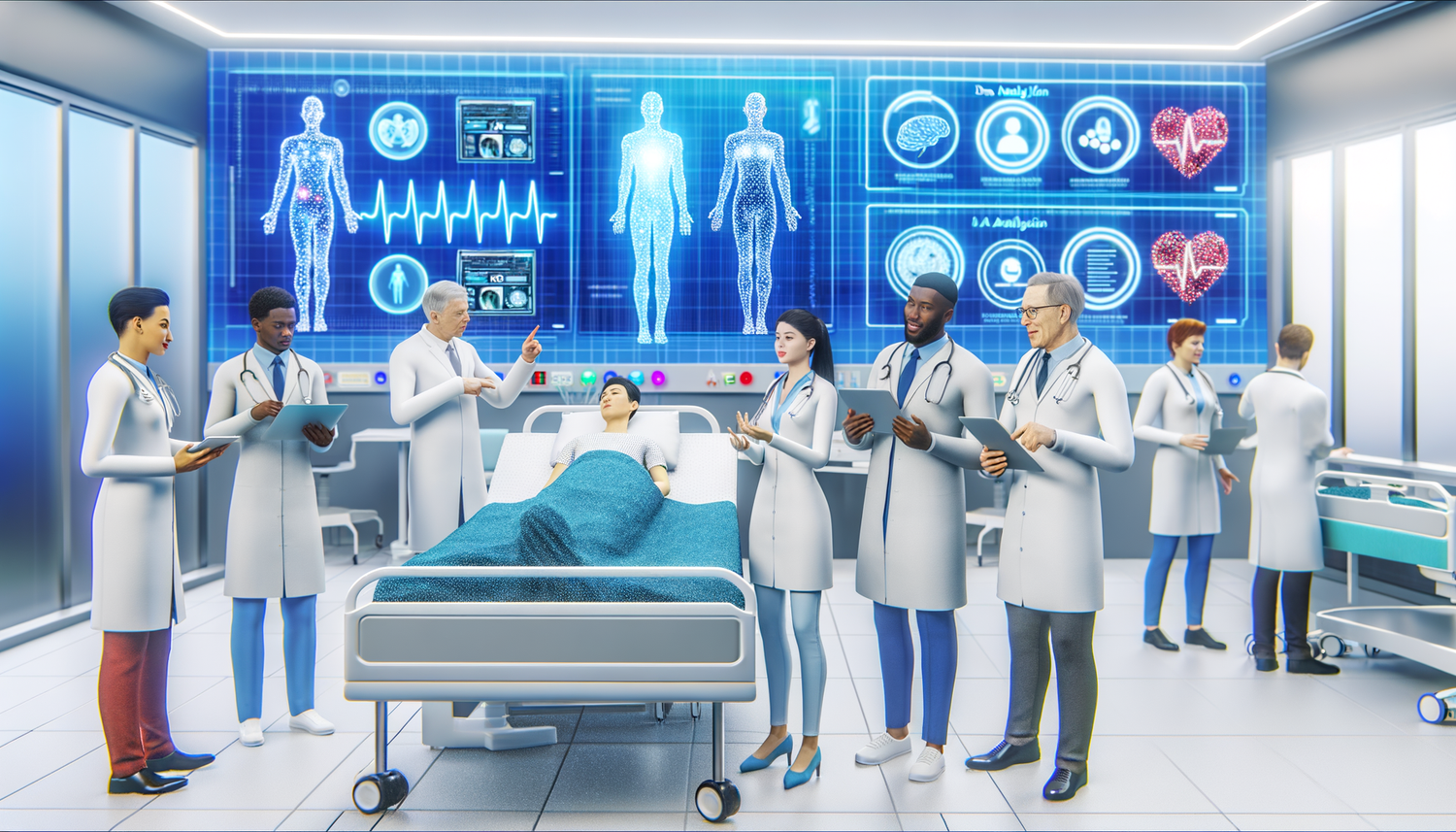
Artificial intelligence (AI) is no longer a science fiction. It is a reality and changes medicine in a way that we could hardly imagine a few years ago. From precise diagnoses to personalized treatments - AI revolutionizes health care. In this article we take a look at the impressive possibilities of AI in medicine and what it means for the future.
AI in diagnostics: a turning point
One of the greatest progress in the Medical technology is the use of AI in diagnostics. AI algorithms analyze medical images such as X-rays, MRTS and CT scans with a precision that can often keep up with human experts-or even exceeds them.
- Early detection: AI can recognize diseases such as cancer in early stages and thus improve the chances of recovery.
- Accuracy: Studies show that AI can achieve or surpass the diagnosis accuracy of experienced radiologists.
- Speed: AI analyzes pictures in a very short time and shortened waiting times for patients.
An example: Google's Deepmind has developed a AI system that recognizes over 50 eye diseases based on retinal cans with 94 % accuracy-comparable to leading ophthalmologists.
Personalized medicine: treatments tailor -made with AI
Ki paves the way for personalized medicine, in which treatments are individually tailored to the patient. By analyzing huge amounts of data, including genetic information, AI supports doctors in choosing the best therapies.
- Genetic analysis: AI analyzes the genetic composition of a patient to recognize mutations and the reaction to Medication to predict.
- Treatment optimization: Algorithms propose optimal medication combinations and doses to minimize side effects.
The potential is particularly evident in oncology: AI helps to adapt cancer therapies to the specific properties of a tumor.
Accelerated medication development thanks to AI
Classic medication development is time -consuming and expensive - it often takes years and costs billions for a new medication on the market. AI changes this by optimizing the process.
- Data analysis: AI searches huge data records to potential Active ingredients to identify faster.
- Predictions: Machine learning models predict how connections with biological goals interact and reduce laboratory tests.
An impressive example: The AI company Insilico Medicine with Machine Learning found a potential medication for fibrosis in just 46 days-a process that usually takes years.
The ethical challenges of AI in medicine
The advantages of AI in medicine are obvious, but there are also ethical questions that we must not ignore.
- Data protection: AI needs access to large amounts of patient data - how safe are they?
- Disturbances in algorithms: If AI is trained with biased data, existing inequalities in healthcare could be reinforced.
- The role of doctors: What happens to doctors when AI takes on more tasks? Do you become overseers or do you lose importance?
These complex topics require careful considerations, while we further integrate AI into the health systems.
Conclusion: shaping the future of medicine
The integration of AI into medicine is not a fad, but a revolution that is already in progress. From improved diagnoses to personalized treatments to accelerated medication development - AI will change health care profoundly. But while we welcome this progress, we also have to master the ethical challenges.
As patients, doctors and society, we have the opportunity to help shape the use of AI in medicine. Stay informed, discuss - and share this article to make the possibilities of this technology known!
0 Comments