
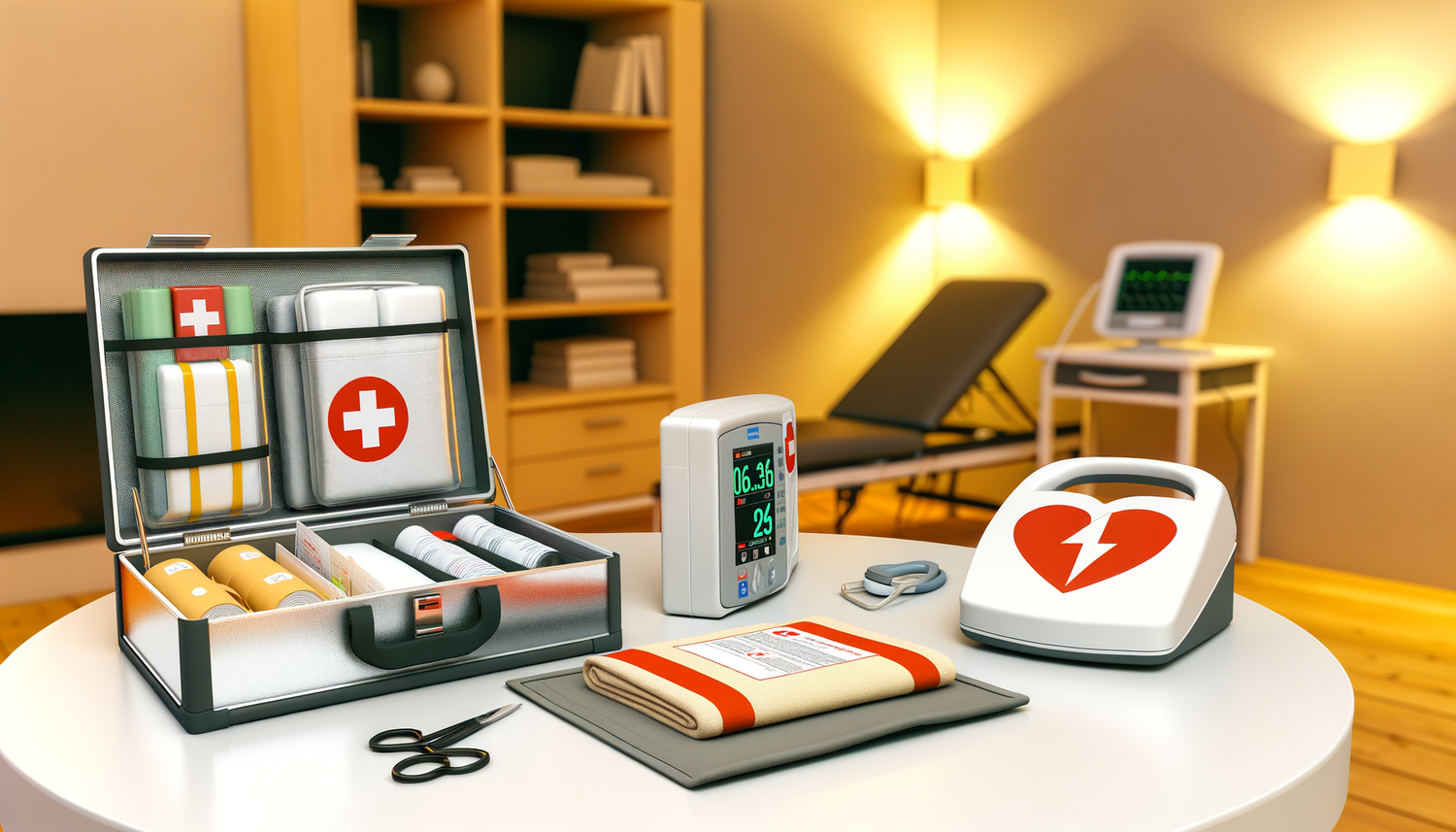
Emergency Medicine for Home & Practice – which equipment can really save lives
Sudden cardiac arrest during sports, an anaphylactic reaction after an insect sting, hypoglycemia in care: Emergencies hit us where we live and work. In this guide, you will learn – exciting and practical – what equipment is sensible in households, medical practices, and care facilities, how to select it, and maintain it reliably. With checklists, FAQs, and links to the most important categories at MeinArztbedarf.com.
Important Note: In case of acute complaints, call emergency services immediately – in Austria 144, Europe-wide 112. This article does not replace medical advice.
Why preparation is so important
In emergency situations, every minute counts. With the right equipment, both laypersons and professionals can stabilize until the emergency services take over. Good preparation does not start only in the acute situation, but with clear standards, readily available equipment, and practiced maneuvers.
Home pharmacy: the solid foundation
A home pharmacy should do more than just provide band-aids and pain relievers. It forms the foundation for quick help in case of injuries, infections, or chronic diseases.
- Bandaging material, band-aids, sterile compresses
- Thermometers, fever-reducing medications (as directed)
- Blood pressure monitors and possibly pulse oximeters
- Compact first-aid kit for car and outdoor
Life-saving devices for laypersons
Automated defibrillators (AEDs) guide step by step through resuscitation and are designed for laypersons. Additionally, simple measuring devices help to recognize critical conditions early.
- AEDs & defibrillators
- Pulse oximeters
- Blood pressure monitors
- Rapid tests (e.g., flu or corona, depending on approval)
Emergency medicine in practice & care
Emergency bags & backpacks
In an emergency, structure and accessibility count. Modular systems with color coding (Airway, Breathing, Circulation) speed up processes and reduce errors.
Airway & Breathing
- Ventilation bags, masks, oxygen source
- Laryngeal masks, tubes, video laryngoscope
Circulation & resuscitation
- Defibrillators and accessories
- ECG devices
- Blood pressure measurement, monitoring
Diagnostics
- Rapid tests (POCT)
- Stethoscopes
- Blood glucose meters
Rapid tests: Laypersons vs. professionals
Rapid tests help to quickly identify diseases. Some are approved for laypersons, others only for medical professionals. Clear labeling and understandable instructions are important.
Buying advice: How to make the right choice
AEDs
- Indoor or outdoor use (pay attention to protection class)
- Electrodes for adults and children
- Support: Reminders for expiration dates
Emergency bags
- Modular design
- Clearly visible, hygienically washable
Diagnostic devices
- Blood pressure measurement on the upper arm
- Pulse oximeter with easily readable display
Maintenance, expiration dates & compliance
Emergency equipment must be checked regularly. Batteries, electrodes, medications, and consumables have expiration dates. Document each check – at least quarterly, in a professional setting after each use.
Training & routine: What really makes the difference
The best equipment is of no use if no one can operate it. Regular first aid courses, simulation training, and clear procedures greatly increase operational safety.
Checklists to tick off
At home
- First aid kit with scissors, gloves, band-aids
- Disinfectants
- Thermometers and fever-reducing medications
- Blood pressure monitors and possibly pulse oximeters
- First aid kit in the car
Practice / Care
- Emergency bag with clear structure
- Airway management (tubes, laryngeal masks, video laryngoscope)
- Ventilation (bag, oxygen, masks)
- Defibrillator and ECG
- Monitoring, rapid tests, stethoscopes
FAQ & common misconceptions
Do laypersons really need an AED?
Yes, AEDs are designed for laypersons and provide exact instructions via voice prompts. The sooner the shock is delivered in case of ventricular fibrillation, the higher the chance of survival.
How often do I need to check the equipment?
At least every three months. In the professional field, additionally after each use.
Which rapid tests are suitable for laypersons?
This depends on the test and the legal approval. Pay attention to clear labels in the shop.
Equip sensibly now
On MeinArztbedarf.com you will find all important categories for your emergency equipment:
- AEDs & defibrillators
- Emergency bags & backpacks
- Ventilation & intubation
- Diagnostics & rapid tests
- Blood pressure, blood sugar, pulse oximeters
- Bandaging material & first aid kits
Whether at home, in practice, or in the workplace – with the right preparation, you can save lives in an emergency.
0 Comments