
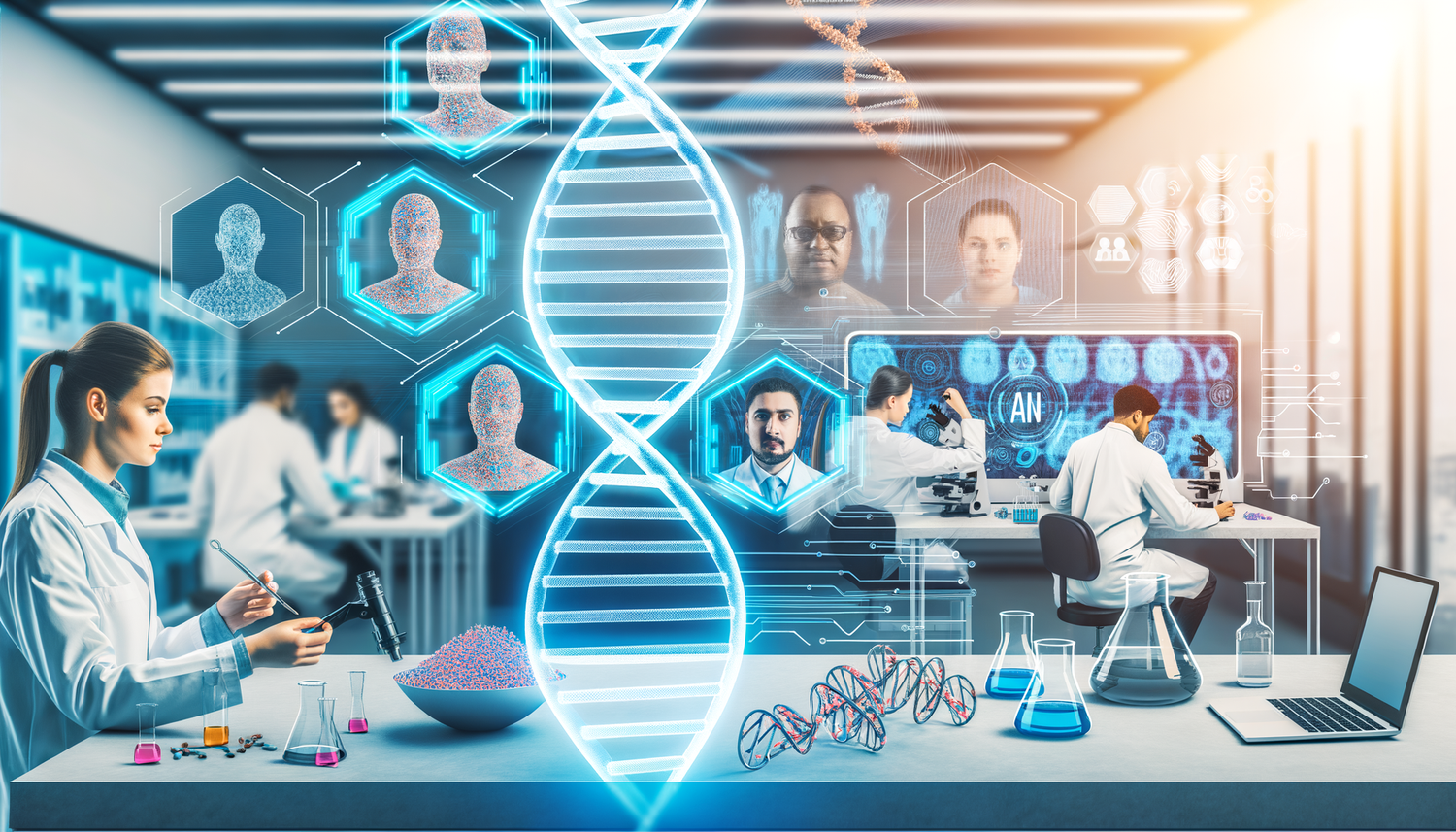
Gen therapies: a milestone in medicine
Genter therapies are a revolutionary method to treat diseases at a genetic level. Instead of just relieving symptoms, they aim to correct or modify the underlying genetic causes. This technology opens up new possibilities, especially for diseases that were previously considered incurable.
What are gene therapies?
In genetic therapies, genetic material is brought into the cells of a patient, changed or removed to treat or prevent an illness. There are different approaches:
- Generate therapy: A functional gene is introduced here to replace a defective one. This is particularly effective for monogenic diseases caused by a single gene mutation.
- Geneditation: Technologies such as Crispr-Cas9 enable precise changes to the DNA to remedy mutations directly.
- Gensilencing: The expression is suppressed by the RNA interference.
- Genaddition: New genes are added to help the body combat diseases such as cancer or infections.
These methods are based on advanced biotechnological processes and require precise control in order to be safe and effective.
Areas of application and potential
Genter therapies could treat a variety of diseases:
- Rare genetic diseases: Diseases such as spinal muscle atrophy (SMA) or certain forms of hereditary blindness have already been successfully treated.
- Cancer: Car-t cell therapy, a form of gene therapy, has shown success in certain leukemia and lymphomas by changing the patient's T cells so that they attack cancer cells.
- Infectious diseases: There is research on the use of gene therapies against HIV and other viral infections.
- Neurological diseases: Diseases such as Parkinson's or Alzheimer's could be treated with targeted genetic interventions.
An impressive example is Luxturna, approved gene therapy for the treatment of a rare form of hereditary visual disturbances. It delivers a functioning copy of the RPE65 gene directly into the retinal cells and has restored vision in many patients.
Further research examines the application for frequent diseases such as heart diseases or diabetes, whereby there is hope that gene therapies can one day be used widely.
Challenges and considerations
Despite their enormous potential, gene therapies faces several obstacles:
- Tax methods: Bringing the genetic material safely and efficiently into the target cells is technically demanding. Viral vectors are often used, but they can trigger immune reactions.
- Long -term effects: The security and effectiveness across long periods of time have not yet been fully researched. Unexpected genetic changes could hide risks.
- Costs and accessibility: Genter therapies are often extremely expensive, which raises questions of justice and access.
- Ethics: The possibility of changing human genome raises ethical questions, especially in germs therapy, which could affect future generations.
These challenges require intensive research and careful consideration of the risks and advantages.
AI supported drug development: accelerate innovation
Artificial intelligence (AI) fundamentally changes the pharmaceutical industry by optimizing the process of drug development. From the discovery of new ones Active ingredients Until the implementation of clinical studies, KI makes development faster, cheaper and more efficient.
How is AI used in drug development?
AI technologies, especially machine learning and deep learning, are used in different phases:
- Target identification: AI analyzes biological data in order to make potential drug goals such as disease -causing Proteins to find.
- Substance screening: Models of mechanical learning predict which chemical compounds are most likely to interact with one goal and thus reduce the laboratory effort.
- Active ingredient design: AI can design new molecules or optimize existing ones to increase effectiveness and minimize side effects.
- Predictive modeling: AI predicts the behavior of drugs in the body, including absorption, distribution, metabolism and excretion (AdME).
- Optimization of clinical studies: AI supports the patient selection, results forecast and real -time monitoring to make studies more efficient.
These approaches use huge amounts of data and complex algorithms to supplement human research capacities.
Advantages of AI in drug development
The integration of AI offers numerous advantages:
- Speed: AI can analyze large data records faster than traditional methods and thus shortens the development time.
- Cost reduction: By optimizing processes and reducing physical experiments, the development costs decrease significantly.
- Improved accuracy: AI recognizes patterns and relationships that could escape human researchers, which leads to more effective drugs.
- Personalized medicine: AI enables the development of tailor -made therapies based on genetics and individual needs of the patients.
An impressive example is Insilico Medicine, which, using AI in just 46 days, identified a potential active ingredient candidate for fibrosis - a process that usually takes years.
Challenges and limits
Despite the advantages, there are also obstacles:
- Data quality and quantity: AI models need large, high-quality data records. Incorrect or biased data can lead to inaccurate predictions.
- Tracificability: Many AI models, especially deep learning, are difficult to understand, which makes it difficult to interpret their results.
- Regulatory hurdles: The use of AI in drug development is new and the legal framework is still developing.
- Integration with traditional methods: The combination of AI knowledge with established scientific practices requires validation and cooperation.
These challenges require close cooperation between AI experts, biologists and regulatory authorities.
Conclusion: a synergistic future
Genter therapies and AI supported drug development are two of the most exciting developments in modern medicine. Genter therapies offer the possibility of healing diseases at their genetic root, while AI revolutionizes the way we discover and develop new treatment methods. Together, these technologies could significantly improve patient care and health care Sustainable change.
In the future, it is crucial to master the challenges: with genetic therapies, delivery methods must be improved, long -term safety guarantees and access is easier. In the case of AI-based drug development, data quality, transparency of the models and regulatory adjustments are central topics.
Through the responsible use of these technologies, we can initiate an era of precision medicine in which treatments are more effective and individually tailored. The future of medicine is promising, and gene therapies and AI show the way.
0 Comments