
• Dr. med. univ. Daniel Pehböck, DESA
/
0 Comments
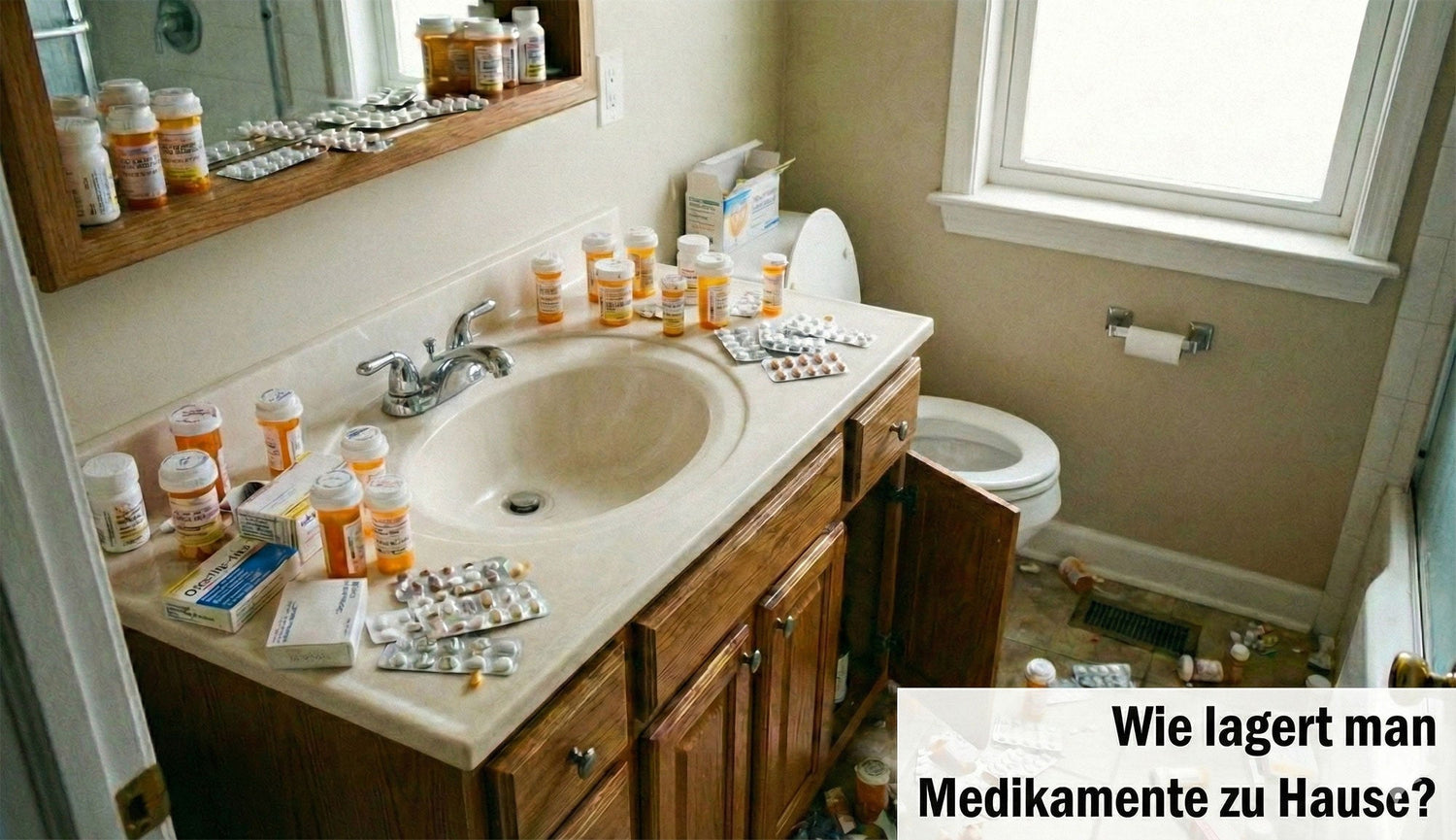
Proper storage of medications: Why the bathroom is the worst place
**Title: Properly Storing Medications: Why the Bathroom is the Worst Place**
**By Dr. Daniel Pehböck**
**Reading Time: 8 Minutes**
Over 90 percent of Austrian households have a home medicine cabinet. Yet, most store their medications in perhaps the worst possible place: the bathroom. What many don't know is that improper storage can render medications ineffective or even harmful. This article explains what is important when it comes to proper storage.
### The Problem with the Bathroom Cabinet
At first glance, the bathroom seems practical: many people take their medications there in the morning and evening, and the mirror helps with the application of eye drops or ointments. However, this room offers the worst conditions for medications.
The humidity in the bathroom typically ranges from 50 to 70 percent, quickly rising above 80 percent after showering or bathing. These extreme fluctuations are detrimental to most medications. Additionally, the temperature varies considerably: from cool 18°C at night to warm 24°C after a hot shower.
The Federal Ministry of Health clearly warns: "Due to the greatly fluctuating humidity and frequently elevated average temperature, the bathroom is not a suitable storage location for medications."
### What Happens to Medications When Stored Incorrectly?
Medications are sensitive products. Improper storage can lead to various issues:
#### Chemical Changes
At temperatures above 25°C, the chemical stability of active ingredients can change. A key rule from pharmacy: when the temperature increases by 10°C, the decomposition rate can double or triple. This means a medication that would normally last two years could lose its effectiveness after just a few months if stored incorrectly.
Even a 10 percent decrease in the active ingredient content leads, according to pharmaceutical quality standards, to a medication no longer being considered effective. What is particularly treacherous: these changes are often not visible.
#### Physical Changes
Some changes can be seen or smelled. Watch out for the following warning signals:
- Discolorations or cracks in tablets
- Liquefaction or discoloration of creams, ointments, and gels
- Melted or deformed suppositories
- Flocculation or cloudiness in liquid medications
- Swollen packaging
- Unusual smells (e.g., vinegar smell in aspirin)
#### Toxic Degradation Products
In the worst case, incorrect storage can produce harmful degradation products. A well-known example is acetylsalicylic acid (ASA, the active ingredient in aspirin): it decomposes to acetic acid when exposed to moisture and heat. Therefore, a vinegar-like smell is a clear warning signal.
### Which Medications are Particularly Sensitive?
Not all medications react equally strongly to unfavorable storage conditions. Here is an overview of the particularly sensitive groups:
| Medication Group | Sensitivity | Storage |
| --- | --- | --- |
| **Insulin** | Very sensitive to heat and cold, protein structure destroyed | Unopened: 2–8°C in the refrigerator; Opened: up to 4 weeks at room temperature |
| **Eye Drops** | Risk of contamination after opening, temperature sensitive | Depending on preparation, cool or at room temperature; only 4 weeks usable after opening |
| **Suppositories** | Melt or deform when heated | Store cool and dry; not to be used if deformed |
| **Ointments & Creams** | Phase separation, degradation of active ingredients | Protect from heat and light; close tube well after use |
| **Vaccines** | Cold chain required, very temperature sensitive | Strictly 2–8°C; never freeze |
| **Pain Patches** | Active release changes with heat | Store below 25°C; watch for overdose in heat |
| **Metered-Dose Aerosols** | Propellant pressure changes | Protect from heat and frost; dosing precision may suffer |
| **Antibiotic Syrups** | Limited shelf life after opening | Often stored in the refrigerator; follow package insert carefully |
### The Three Enemies of Your Medications
#### 1. Moisture
Moisture is the biggest enemy of many medications. In the bathroom, humidity often exceeds 60 percent. Even tablets in blister packs can slowly absorb moisture, losing their efficacy. Dispersible tablets are particularly at risk, as they can react prematurely in a moist environment.
#### 2. Temperature
Most medications should be stored at room temperature between 15 and 25°C. In pharmacies, a statutory maximum temperature of 25°C applies. The bathroom reaches this threshold quickly, especially in summer.
Some medications, like insulin, certain eye drops, or vaccines, require cooling storage at 2 to 8°C. But beware: not every medication tolerates refrigeration. Some solutions or gels may clump and become unusable in the refrigerator.
#### 3. Light
UV radiation can decompose active ingredients. Thus, many medications are delivered in brown or dark glass bottles. However, even these do not protect from light exposure. Always store medications in a dark place.
### How to Properly Store Your Medications
#### The Ideal Storage Place
Choose a room with a constant temperature and low humidity. Ideal locations include:
- **Bedroom:** Usually cool and dry
- **Hallway or Storage Room:** Little temperature fluctuation
- **Lockable Medicine Cabinet:** Safe from children and light-protected
**Inappropriate locations include:** Bathroom (moisture), Kitchen (heat from cooking), Window sills (sun exposure), and the Car (extreme temperatures).
#### 10 Practical Tips for Everyday Life
1. **Keep Original Packaging:** It protects from light and contains important storage information.
2. **Retain Package Inserts:** They contain specific storage instructions for each preparation.
3. **Note Opening Date:** Many medications have a limited shelf life after opening.
4. **Sort Regularly:** Check expiration dates at least twice a year.
5. **Refrigerated Medications:** Store in the middle refrigerator shelf, not at the back (risk of freezing).
6. **Never Freeze:** Frozen medications can permanently lose their effectiveness.
7. **Remove Hygienically:** Do not touch drops and ointments with fingers.
8. **Store Out of Children's Reach:** Keep medications beyond children’s reach.
9. **When in Doubt, Ask:** Your pharmacy will gladly advise you on optimal storage.
10. **Watch for Changes:** Do not use discolored, deformed, or unusually smelling medications.
### Medications When Traveling
Particularly in summer, caution is advised. In a parked car, temperatures can quickly rise above 50°C. Even a few hours of direct sunlight can render medications unusable, even if they cool down again afterward.
For transporting cooling-required medications like insulin, a cooling bag is advisable. Important: Medications should not lie directly on the cooling pack but be wrapped in a towel, for example, to prevent freezing.
**Important Note:**
If you suspect that a medication has been damaged due to improper storage, do not use it—even if it has cooled down or appears unchanged externally. In case of doubt, consult your pharmacy.
### Conclusion: Small Change, Big Impact
Proper storage of medications is not a trivial matter but essential for their effectiveness and your health. The good news: you can achieve a lot with little effort. Simply move your home medicine cabinet from the bathroom to the bedroom or a dry cabinet in the hallway.
This ensures that your medications remain effective, safe, and of high quality until the expiration date.
**Our Tip:**
A lockable medicine cabinet provides optimal protection for your home medicine supply—from light, moisture, and curious children's hands. Discover our range of practice and storage supplies.
**Sources and Further Information:**
- Federal Ministry of Health: Properly storing and disposing of medications
- Medical Commission of the German Medical Association: Temperature sensitivity of medications
- Federal Union of German Pharmacists' Associations (ABDA)
- Austrian Chamber of Pharmacists
0 Comments