
Krebsmarker-Tests
Die Kategorie Krebsmarker-Tests umfasst Schnelltests, Labortests und das zugehörige Verbrauchsmaterial zur Erfassung und quantitativen Bestimmung relevanter Marker in Blut und anderen Proben. Diese Testlösungen unterstützen Befundung und Therapie‑Monitoring, verbessern Prozesssicherheit und Hygiene im Praxis‑ und Laboralltag und liefern präzise sowie reproduzierbare Ergebnisse.
1 Produkt
Filter

Cleartest PSA Schnelltest
Krebsmarker-Tests
Produktarten und Testformate
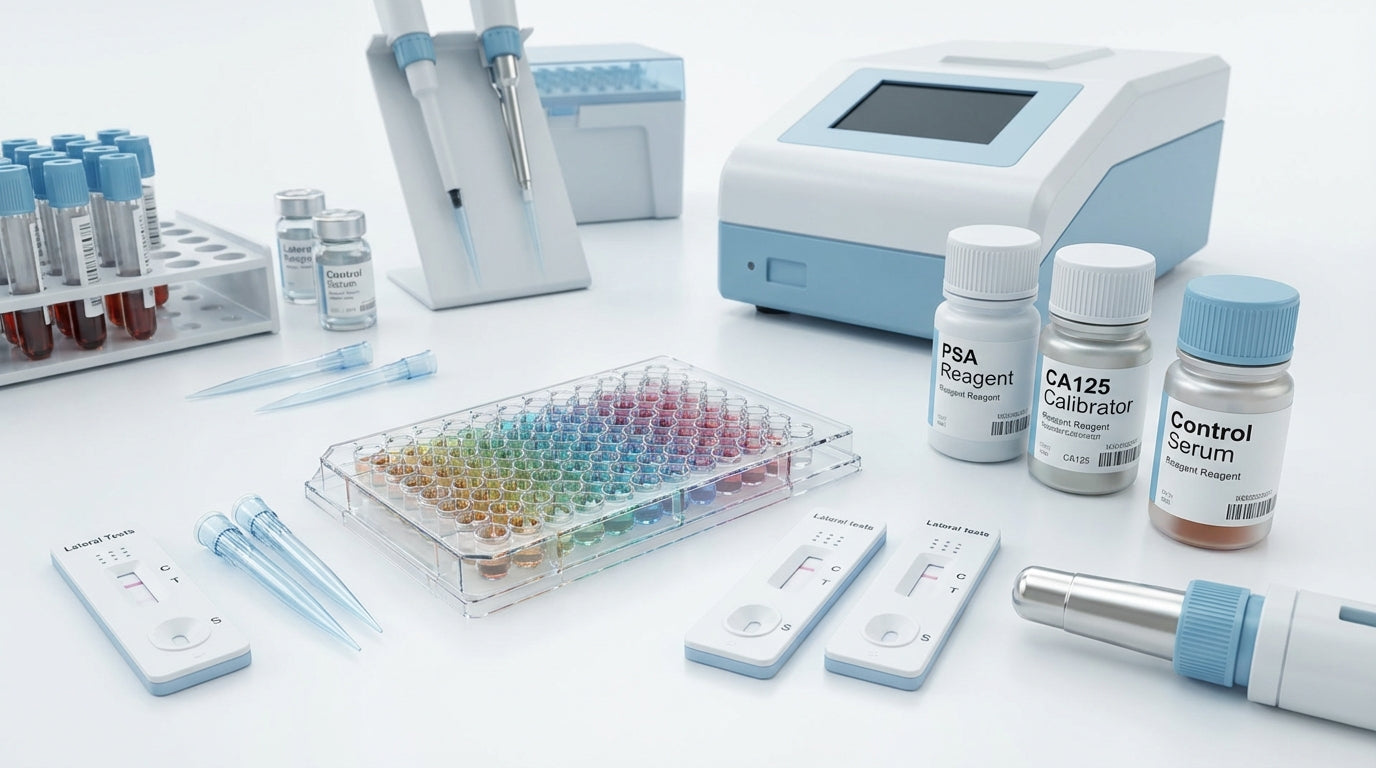
Die Kategorie Krebsmarker-Tests umfasst verschiedene Testformate zur laborseitigen und point-of-care-Detektion von Tumormarkern. Typische Produktarten sind serologische Immunassays (ELISA-Kits), Schnelltests/Lateral-Flow-Tests, Automatisierungsreagenzien für Analysengeräte sowie Kalibratoren und Kontrollen. Ergänzende Verbrauchsmaterialien wie Probenröhrchen, Pipettenspitzen und Reagenzbehälter zur Routinelabororganisation runden das Sortiment ab.
- ELISA- und Chemilumineszenz-Assays
- Schnelltests / Lateral-Flow
- Kalibratoren, Kontrollen, Reagenzien
- Probenvorbereitung und Verbrauchsmaterialien
Einsatzbereiche und typische Anwendungssituationen
Krebsmarker-Tests werden in der labordiagnostischen Überwachung, in Screening-Szenarien zur Verlaufskontrolle und in situationsabhängigen Abklärungen eingesetzt. Im Alltag dienen sie der quantitativen Bestimmung von Proteinen wie PSA, CA125, CEA, AFP oder CA19-9 in Serum/Plasma. Die Testlösungen ermöglichen standardisierte Abläufe: Probenahme, Zentrifugation, Reagenzvorbereitung, Messung und Qualitätskontrolle. Schnelltests bieten zusätzlich rasche Orientierungsergebnisse, während ELISA- und automatisierte Systeme präzise Laborwerte liefern.
Qualität, Sicherheit und Organisationsnutzen
Produkte in der Kategorie sind auf Reproduzierbarkeit, Chargenkontrolle und einfache Integration in Laborprozesse ausgelegt. Qualitätskontrollen und Kalibratoren unterstützen die Gütesicherung; validierte Reagenzien und standardisierte Testkits erleichtern zuverlässige Befundabgaben. Ergonomische Verpackungen und vorkonfektionierte Testkits tragen zur effizienten Probenbearbeitung und hygienischen Handhabung bei.
Marken und Herstellungsumfeld
Lösungen von Herstellern wie Roche, Abbott, Siemens und Bio‑Rad finden sich neben spezialisierten Kit-Herstellern und Lieferanten von Verbrauchsmaterialien. Die Kombination aus etablierten Diagnosesystemen und ergänzenden Testkits erlaubt sowohl Routinebetrieb als auch projektbezogene Messaufgaben.
Wichtige Eigenschaften und Auswahlkriterien
Bei der Auswahl von Krebsmarker-Tests sind Sensitivität, Spezifität, Nachweisbereich, Kompatibilität mit vorhandenen Analysengeräten und verfügbare Qualitätskontrollen maßgeblich. Weitere Entscheidungsfaktoren sind Durchlaufzeit, Automatisierungsgrad, Lager- und Handhabungsanforderungen sowie die Verfügbarkeit von Kalibrationsmaterialien.