
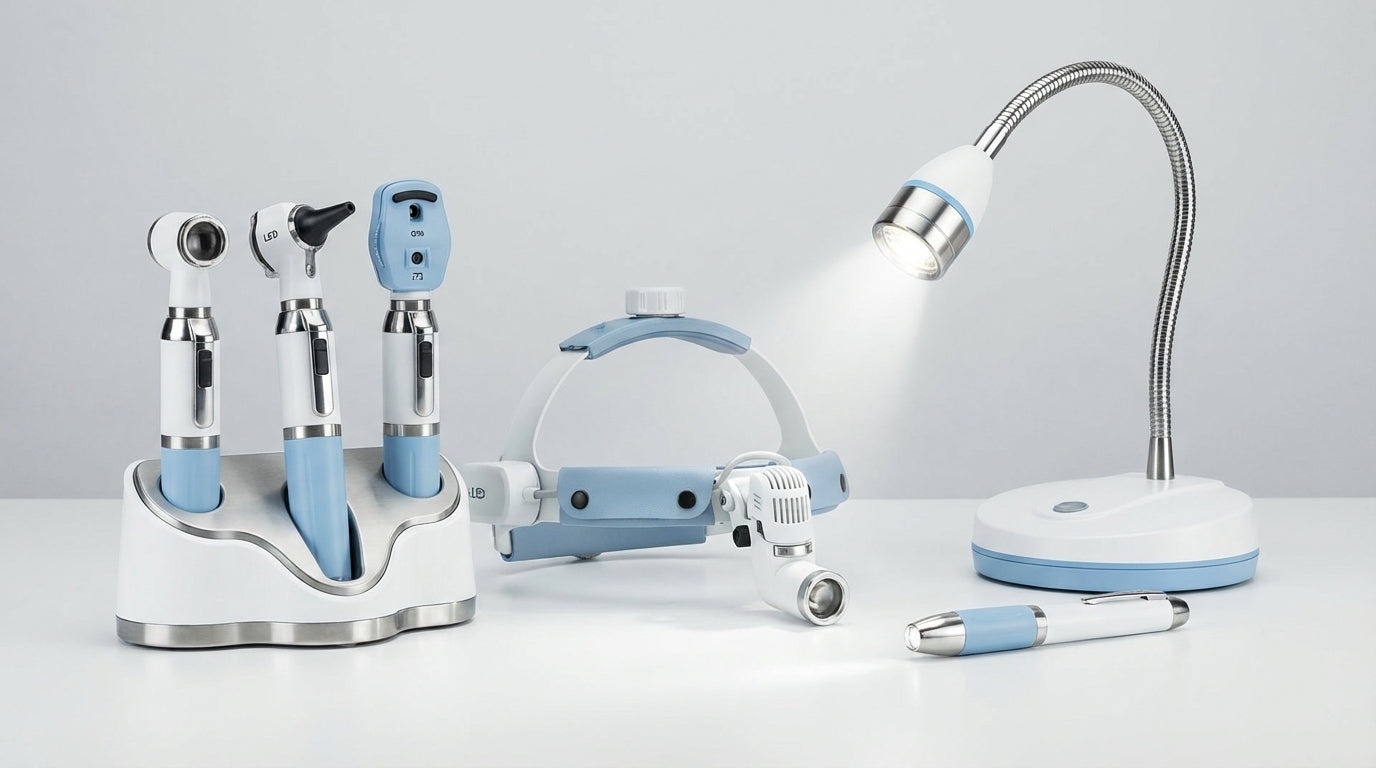
Diagnostic lights
The diagnostic lighting category includes examination and treatment lamps, penlights, headlights and task lights for precise illumination of medical examinations. They provide support during diagnosis and treatment, improve visibility, facilitate work organization and increase safety in everyday life through precise and hygienic illumination.
Diagnostic lights
Areas of application and application situations
Diagnostic lights are used in examination and diagnostic processes to direct structured, shadow-free light onto body surfaces and examination areas. Typical application situations include general examinations, ENT and eye inspections, wound assessment, as well as routine outpatient and inpatient activities where high-contrast, true-color light is necessary for reliable assessment. Mobile hand lamps, head lamps and table lamps enable flexible use for short or extended use.
Product types and technical characteristics
The category includes classic hand lamps, LED diagnostic lights, headlights with headband, stationary examination lights and dimmable spot lights. Important properties are high color rendering (CRI), variable brightness, focusable light cones, long operating time with battery operation and low heat generation. Hygienically smooth surfaces and easy-to-clean housings support clean use.
- Hand lamps / hand diagnostic lights
- LED headlights and headlights
- Table and mounting lights
- Dimmable, focusable spot lights
Workflow and security benefits
Well-selected diagnostic lights improve visibility, reduce examination times and increase the precision of visual findings. Battery-operated models enable quick mobility, while permanently installed lights offer constant light quality. Long-lasting LEDs reduce maintenance and energy costs, while ergonomic handles and balanced weights make handling easier during longer examinations.
Quality, care and selection criteria
When selecting diagnostic lights, light color, luminance, CRI value, battery life and ability to clean are crucial. Accessories such as replacement batteries, chargers and sterilization containers increase the service life. Solutions from manufacturers such as HEINE, Riester and KaWe stand for proven workmanship quality and compatible accessories.