
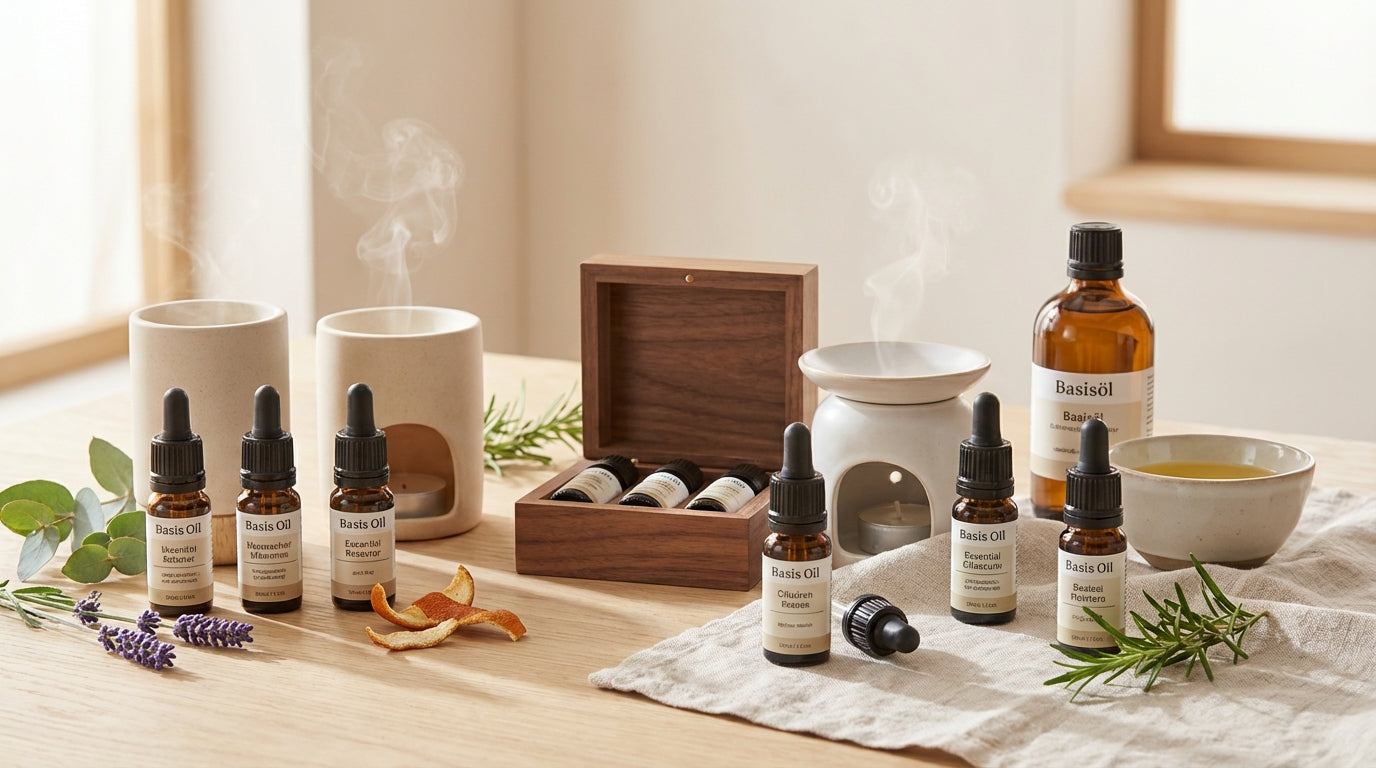
Essential oils
The category aromatic oils includes concentrated, high-purity plant extracts in various dosage forms for use in diagnostic, therapeutic, and hygienic workflows. They are used for targeted airspace regulation, supporting olfactory tests, application in controlled aroma procedures, as well as supplementing hygiene measures and safety concepts in daily practice.
1 product
filter
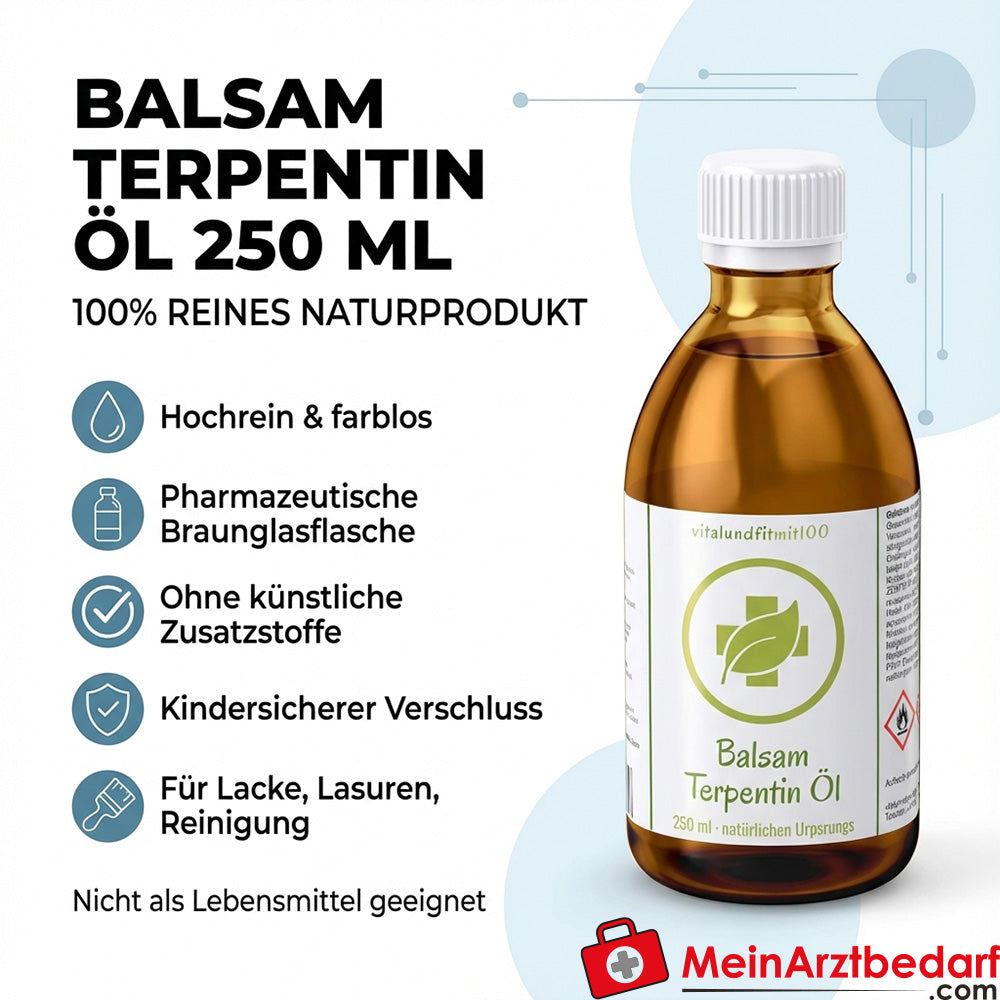
Balsamic turpentine oil (turpentine oil) 250 ml colourless oil in pharmaceutical amber glass bottle
Essential oils
Areas of application and application
Essential oils are used in a variety of ways in everyday practice and in professional work environments. Typical areas of application include room air treatment, support for relaxing applications, aroma-supported accompaniment to examination or treatment processes and use in dilutions for topical applications. Targeted selection and correct dilution enable safe handling and contribute to hygienically orderly processes.
Product types in the Essential Oils category
The range includes individual, pure oils, essences as mixtures, base oils for dilution and small container sizes for professional use. Available product types:
- Pure essential oils (e.g. lavender, eucalyptus, peppermint)
- Mixtures and compositions for different application focuses
- Base and carrier oils for safe dilution
- Small-volume bottles and dropper attachments for precise dosing
Quality characteristics and product selection
The main criteria for selection are purity, origin and analytical tests (e.g. GC/MS analyses) as well as suitable packaging for light and air shielding. Products from manufacturers such as Primavera, Farfalla and Weleda complement the range and offer different quality profiles and fragrance compositions.
Safety, storage and handling
For safe use, instructions on dilution, intolerances and storage are essential. Essential oils should be stored in a cool, dark place and out of direct sunlight. Equally important are dosing aids and packaging that enable precise dispensing in order to make work processes efficient and safe.
Advantages and use in everyday work
Essential oils offer flexible application options: easy integration into room scenting systems, use in diffusers or targeted use in combination with base oils. They support structured, hygienic processes through manageable container sizes and clearly labeled ingredients.