
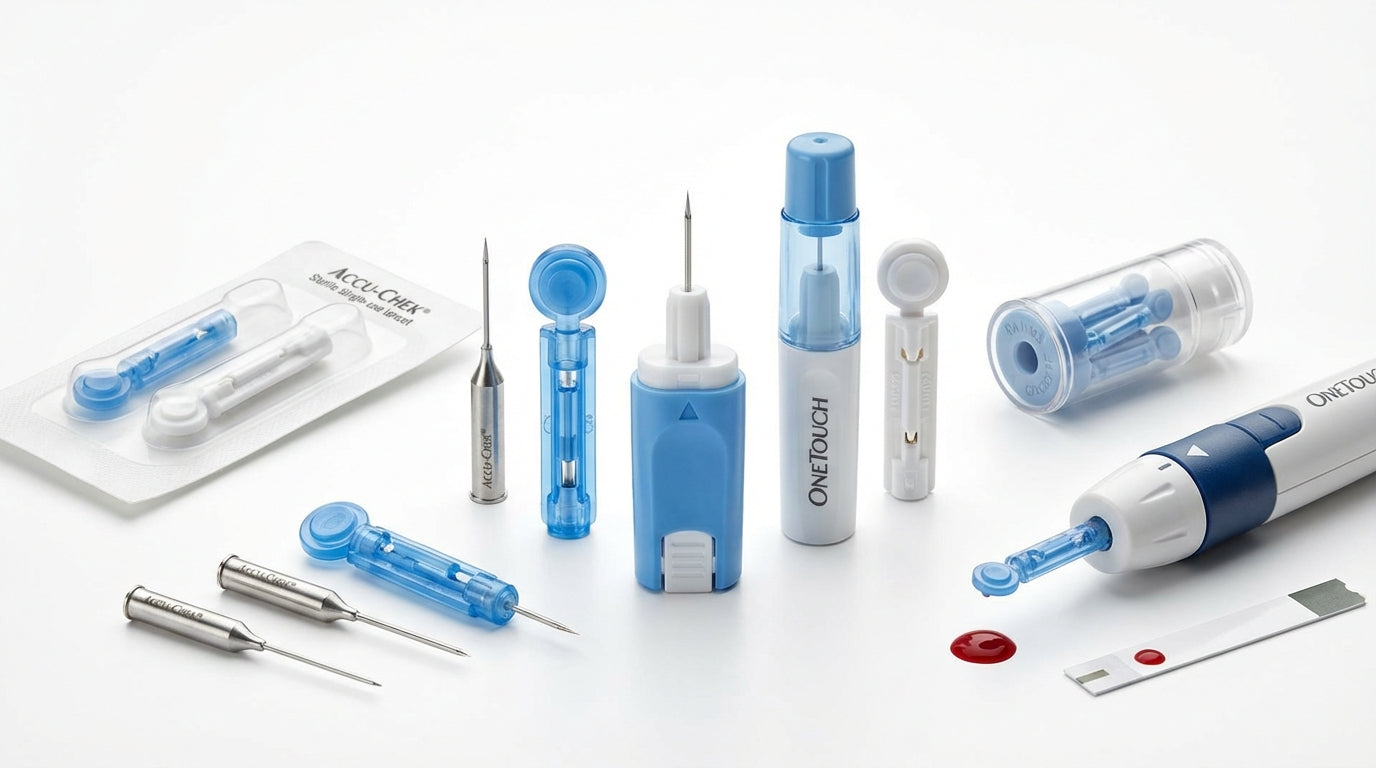
Lancets for blood glucose measurement
Lancets for blood glucose measurement include single-use lancets with various penetration depths and sterile disposable tips for capillary blood collection. They enable reliable sample collection for blood glucose testing and promote hygiene, safety, and efficient organization of the measurement process, as well as supporting diagnostic and therapeutic procedures.
2 Products
filter

Accu-Chek Softclix lancets 0.4 mm sterile compatible with Softclix lancing device
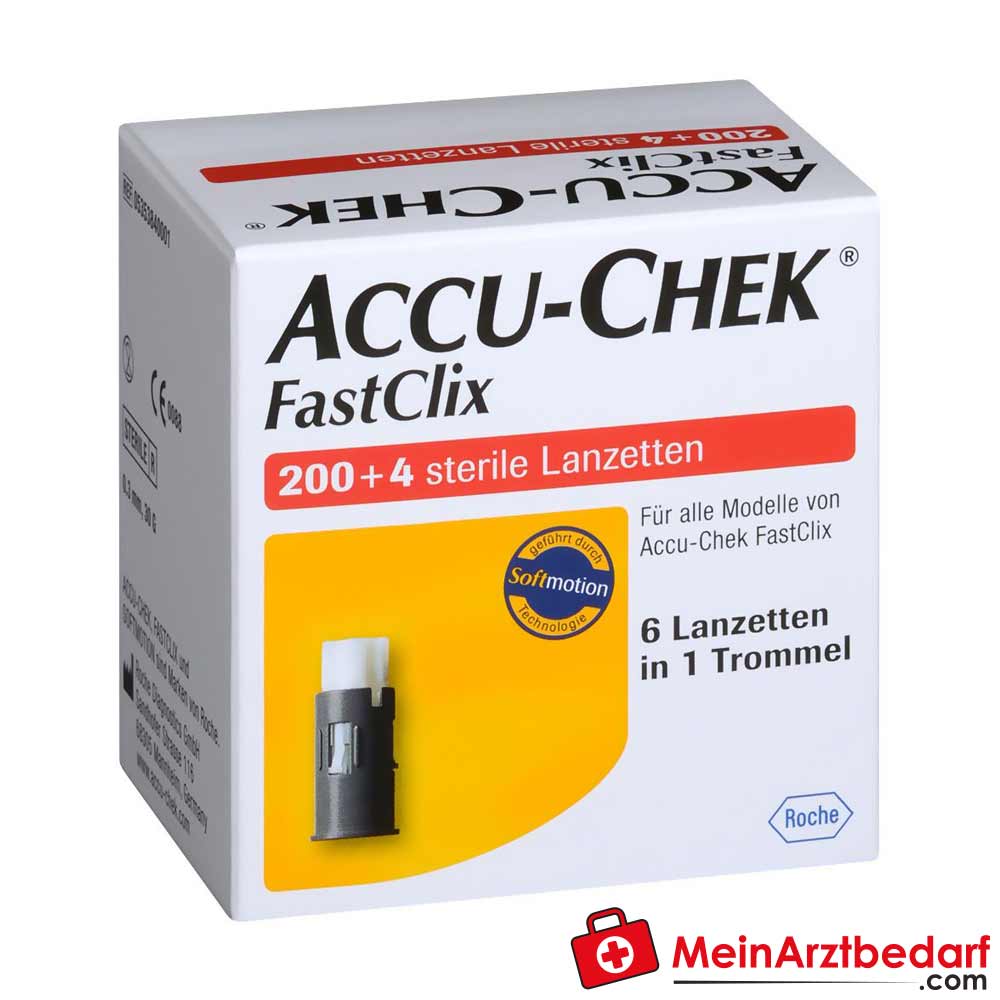
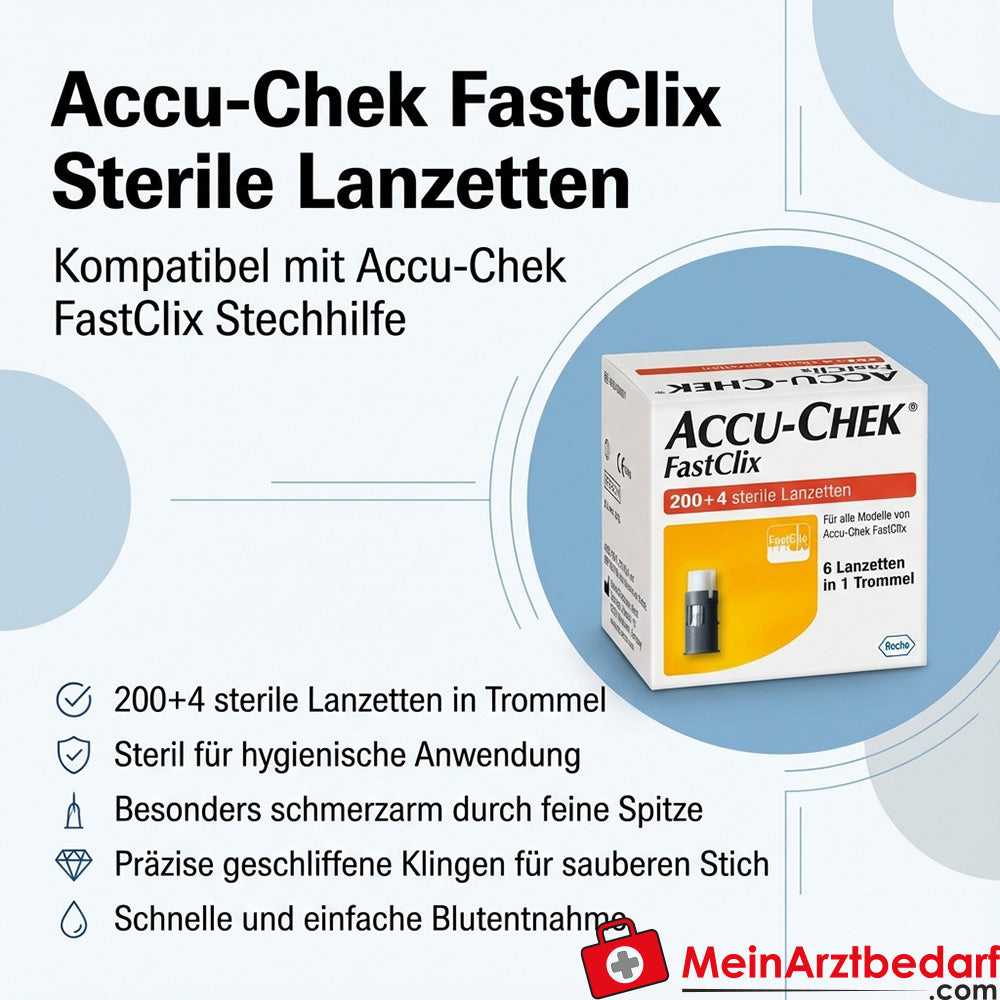
Accu-Chek FastClix sterile lancets 204 pieces for lancing device
Lancets for measuring blood sugar
Areas of application and use
Lancets for measuring blood sugar are used for capillary blood collection from fingertips or alternative measuring points as part of routine blood sugar checks, screening measurements and spot checks. They support hygienic work processes through sterile, disposable packaging and reduce cross-contamination risks. In practice, both standardized punctures are used for regular measurements as well as selective measurements for complex processes.
Product types and properties
The category includes different product types and designs that differ in puncture depth, needle size (gauge), tip and mechanics. The typical variants include:
- Sterile disposable lancets in various diameters (e.g. 28G–33G) for minimally invasive puncture strengths
- Safety lancets with retraction or cover mechanism to prevent needle sticks
- Cartridges or refill containers for a suitable lancet changing system
- Lancets with different puncture depths to adapt to skin type and measurement site
Quality, hygiene and ease of use
Hygiene and user safety are paramount: sterile individual packs, tested material quality and safe disposal are central features. Ergonomic designs make handling easier and contribute to fast, reproducible measurement processes. Selection criteria include needle size, pain sensitivity, compatibility with Lancing devices and safety functions.
Advantages in everyday practice
By using suitable lancets, measurement processes can be standardized, measurement times shortened and hygiene risks minimized. Good products offer:
- constant puncture depth for reproducible results
- low sensation of pain due to fine tips
- Safety mechanisms to prevent needlestick injuries
- Easy to use and compatible refill systems
Brands and selection
The range includes solutions from manufacturers such as Accu-Chek, OneTouch and BD, which offer different lancet types and security variants. When making your selection, it is advisable to coordinate with existing lancing devices, the desired puncture depth and organizational requirements for disposal.