
Asthma & Airways
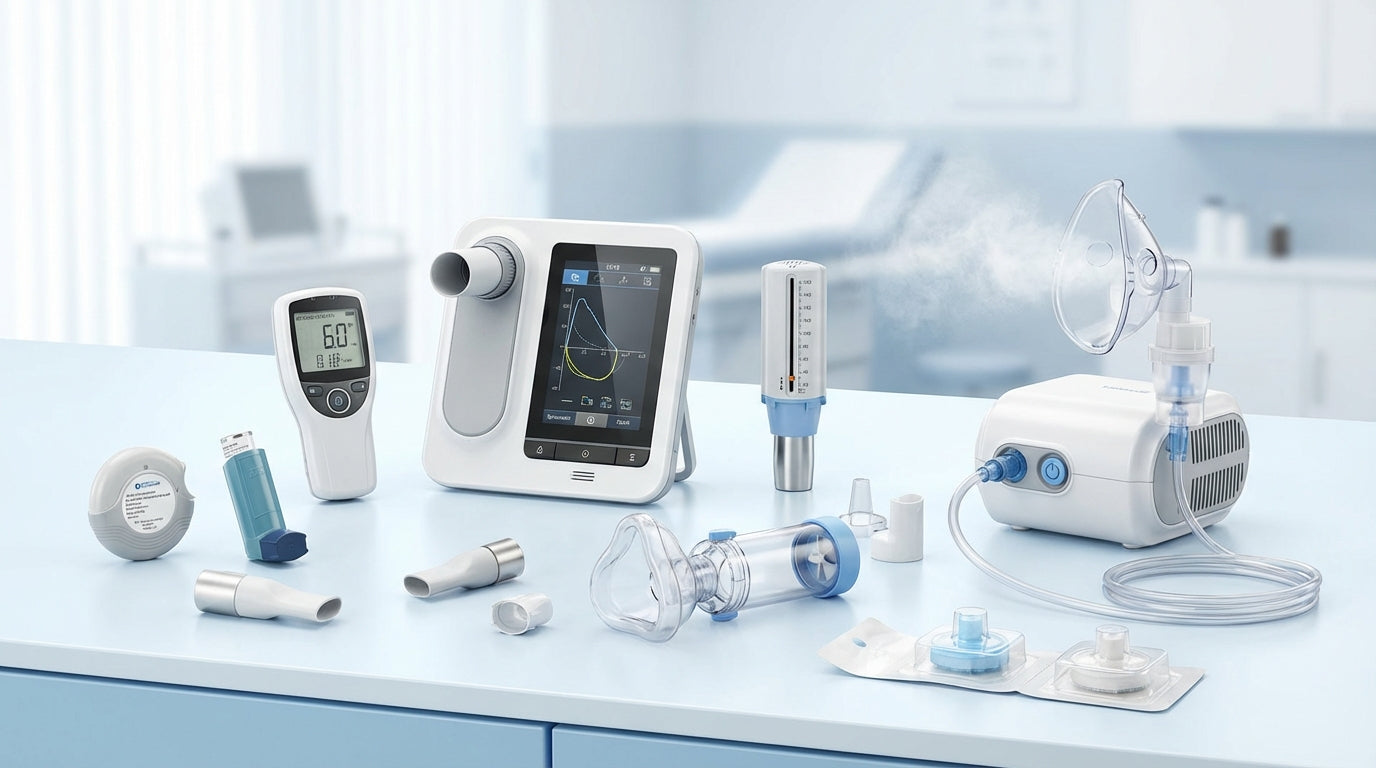
In the category Asthma & Respiratory, there are inhalation devices, nebulizers, lung function measurement devices, airway accessories, as well as solutions for cleaning and secure storage. The products support diagnostics, therapy, organization, hygiene, and safety in daily practice and enable precise measurements, efficient medication administration, and safe handling.
0 Products
filterNo products found
Use fewer filters or delete all of them
Asthma & respiratory system
Areas of use and fields of application
Products from the Asthma & Respiratory System category support examinations, diagnostics, therapy and hygienic use for respiratory diseases. They are used for pulmonary function testing, inhalation therapy, breathing training and for acute respiratory support. Typical application situations include measuring respiratory flow performance, targeted medication administration via inhalers and nebulizers, and the safe administration of aerosols in various clinical and outpatient environments.
Product types and solutions
The category includes both mechanical and electronic aids for respiratory care. The product types include measuring devices for pulmonary function diagnostics, inhalation accessories, nebulizers (compressor, mesh or ultrasonic nebulizers), spacers and inhalation aids, masks and mouthpieces, tubes as well as hygiene and consumables for safe use.
- Peak flow and spirometry measuring devices
- Inhalers, spacers and inhalation aids
- Nebulizers and accessories (masks, tube systems, filters)
- Respiratory therapy accessories: breathing trainers, PEP and OPEP devices
- Disposable items and cleaning products for hygienic processes
Application in everyday practice and benefits
Measuring devices enable standardized recording of breathing parameters for progress monitoring and decision support. Nebulizers and spacers facilitate the dosed delivery of inhaled substances and the distribution of aerosols in the respiratory tract. Masks and matching mouthpieces ensure a tight seal and comfort, while consumables and cleaning accessories ensure hygienic usability and ease of maintenance. The targeted use of these products makes work processes more efficient and safer.
Quality characteristics and selection criteria
When choosing, measurement accuracy, material quality, compatibility of connections as well as easy cleaning and disinfection are crucial. Mobile and compact devices offer flexibility, while robust, easy-to-disinfect components support hygiene. Pay attention to comprehensible specifications for flow rates, particle sizes for nebulizers and tested tightness for masks and adapters.
Typical advantages at a glance
- Precise diagnostics and follow-up monitoring
- Efficient and dosed inhalation care
- Improved hygiene through disposable items and easy-to-clean components
- Flexibility through mobile and compact equipment