
Circulatory stimulation & dizziness
The Circulatory Stimulation & Dizziness category includes aids and devices for stimulating circulation, recording and documenting relevant parameters as well as additional accessories for safe use. The products support diagnostics, treatment and organizational processes and offer precise measurement, easy handling and high safety and hygiene standards.
0 Products
filterNo products found
Use fewer filters or delete all of them
Circulatory stimulation & dizziness
Areas of use and fields of application
Products for Circulatory stimulation & dizziness support mobility, circulatory stability and balance tests in everyday practice and care. Typical application situations include orthostatic tests, mobilization exercises, prevention of circulatory problems after prolonged immobility as well as exercise and rehabilitation measures to improve standing and gait stability. The articles are used to safely carry out examinations, patient-oriented therapy and organizational integration into treatment processes.
Product types and functions
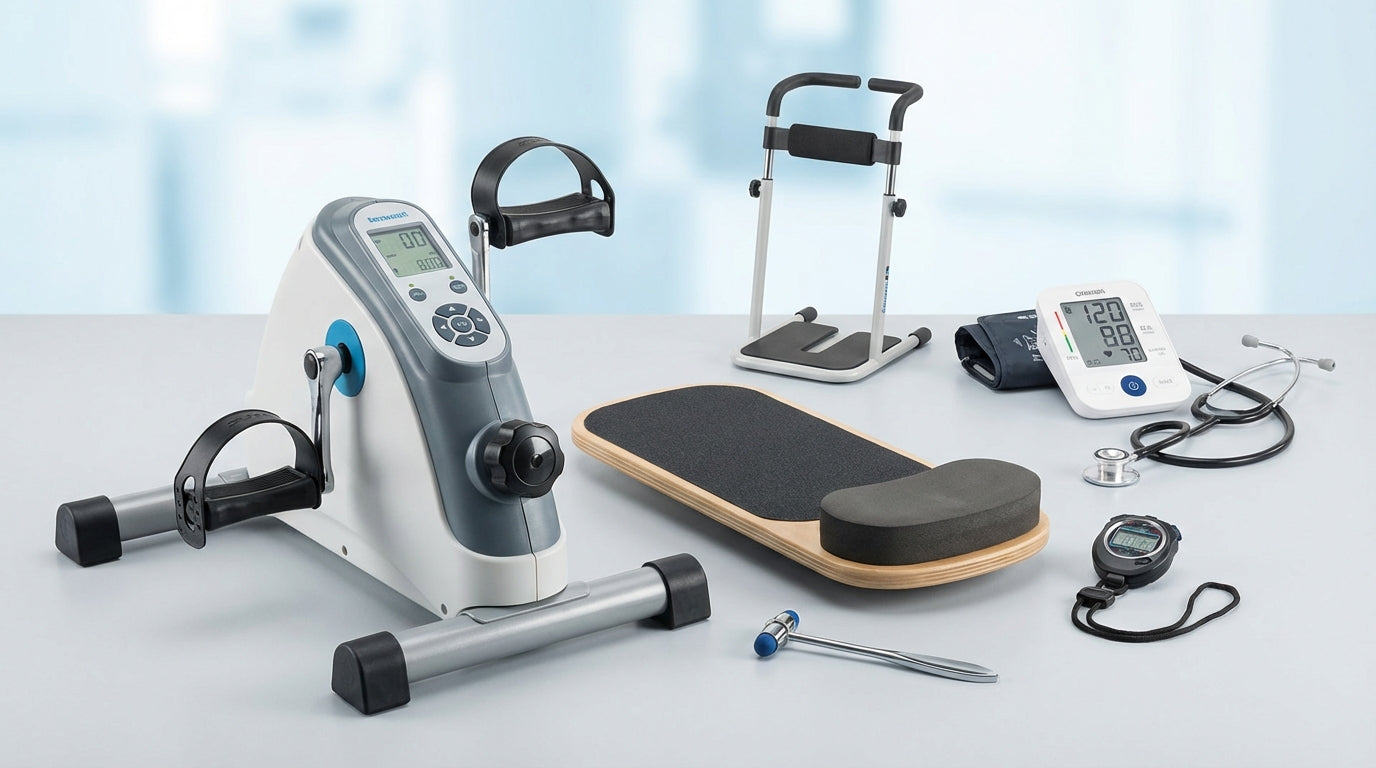
In the area of circulatory stimulation and vertigo you will find devices and aids that offer mechanical activation, proprioceptive training and diagnostic support. These include motorized and manual training devices, balance and stability platforms, position change aids, clocks and simple exercise equipment.
- Pedal trainer and leg trainer for passive and active training
- Balance boards, seesaws and tilt boards to promote balance
- Positioning and storage aids for safe position changes
- Small mobility-enhancing devices such as standing trainers and walking supports
- Measuring and testing accessories for orthostatic and balance tests
Use in everyday medical practice
The products for Circulatory stimulation & dizziness create structured, reproducible conditions for examination and therapy. They make it easier to change position safely, promote blood circulation and support targeted mobilization. Thanks to their robust design, easy-to-clean surfaces and ergonomic controls, the solutions contribute to efficient workflows and hygienic work processes.
Quality, ease of use and integration
Important features are adjustability, non-slip surfaces, easy operation and low-maintenance construction. Devices with clear setting scales and safety-relevant interlocks increase process reliability. Modular structure and compact design facilitate integration into existing workstations and treatment rooms.
Recommended principles of use
For safe use, training intensity and position changes should be individually adjusted and documentation and processes standardized. Combinations of proprioceptive training, guided pedal training and gradually increased load optimize routine use and promote sustainable mobility.