
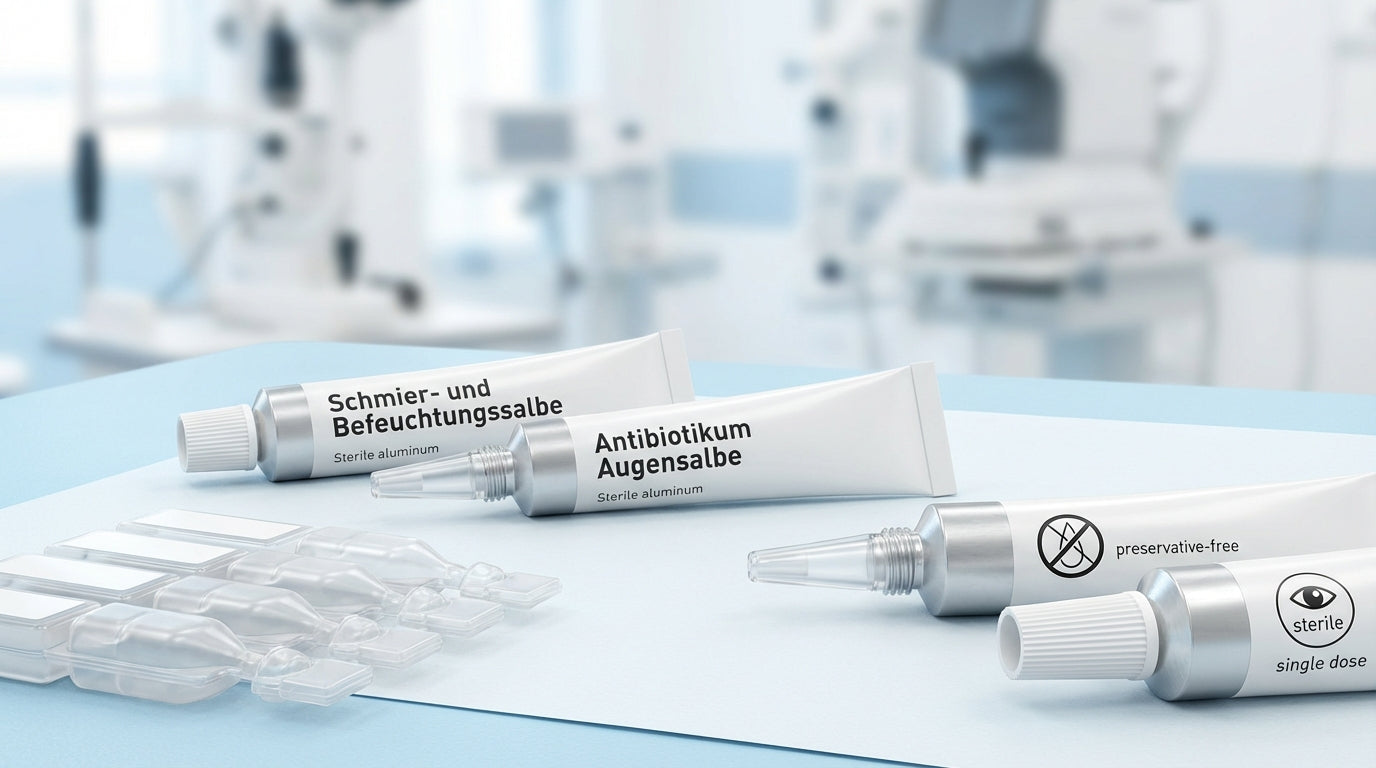
Eye ointments
The category of eye ointments includes sterile, ready-to-use preparations for local application to the eye, such as for lubrication, disinfection, or preparation for examinations. They facilitate the conduct of examinations, support local care, and contribute to hygiene and safety in daily medical practice.
0 Products
filterNo products found
Use fewer filters or delete all of them
Eye ointments
Areas of use and fields of application
Eye ointments are used for local care and support in a variety of ophthalmological situations. They are used to moisten and lubricate the ocular surface film, to provide local antimicrobial care, to relieve irritation after procedures and to provide a temporary protective layer during mechanical stress. In everyday practice, suitable eye ointments help to make treatment processes safe and hygienic, e.g. B. through sterile individual packs, clear labeling and easy-to-dose tubes.
Product types in the category
The selection includes various dosage forms and compositions, tailored to different requirements:
- Lubricating and moisturizing ointments (lipid-containing, preservative-free)
- Antibiotic eye ointments in tubes and single doses
- Antiseptic and anti-inflammatory formulations
- Aftercare and protective ointments for postoperative applications
- Special ointments for contact lens wearers or dry eyes
Quality, packaging and handling
Important quality criteria are sterile filling, preservative-free recipes, non-return tube valves and clear instructions for use. Sterile vials and single doses minimize cross-contamination; resealable tubes enable precise dosage. Clear labeling and batch information support safe storage and traceability.
Advantages for efficient processes
Well-selected eye ointments make integration into standardized treatment protocols easier. They reduce handling times through practical pack sizes, improve hygiene safety through sterile units and enable stable storage thanks to long-lasting recipes. Products from manufacturers such as Bepanthen, Tobrex and Corneregel exemplify different application profiles and are represented in the category.
Notes on properties and selection criteria
Compatibility, preservative-free formulations, viscosity and form of application play a central role in the selection. Pay attention to information on sterility, durability after opening and material compatibility for contact lenses. The combination of suitable product selection, proper storage and correct application increases safety and cost-effectiveness in everyday practice.