
Fever
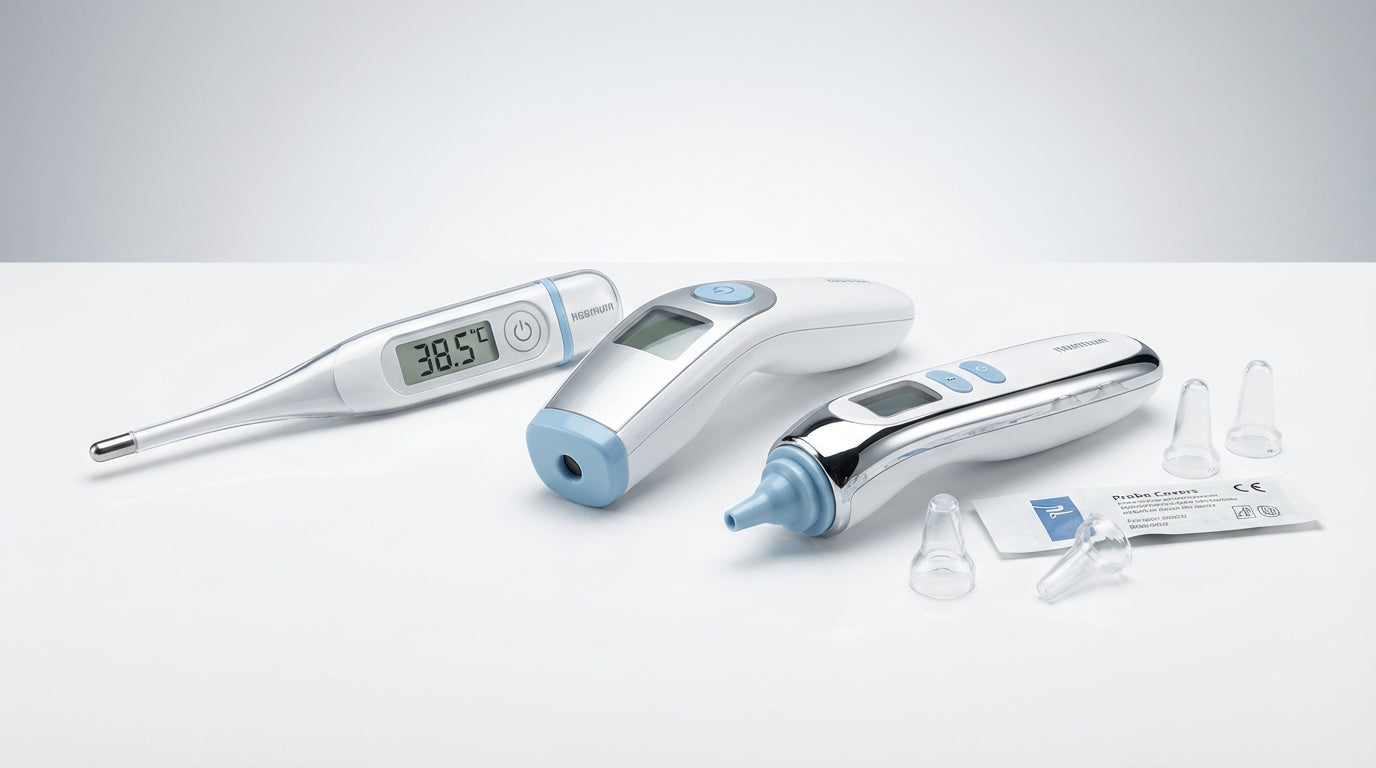
The fever category includes thermometers, measurement aids, fever management and documentation materials, as well as supplementary hygiene and disposable products for the controlled handling of elevated body temperature. These items are used for precise temperature measurement, secure organization of measurement data, and hygienic handling during examinations and treatments. Quality and reliability in material selection and functionality support routine procedures in medical everyday practice.
0 Products
filterNo products found
Use fewer filters or delete all of them
Fever
Areas of application and clinical application
Products from the category Fever support the detection and monitoring of elevated body temperature in examinations, diagnostics and daily patient care. Measuring devices are used for quick temperature checks during initial examinations, follow-up checks and for documenting vital parameters. Hygienic use and safe transfer of findings are central requirements in routine examinations and emergency situations.
Product types and typical features
The selection includes digital thermometers, infrared or non-contact forehead and ear thermometers, classic clinical thermometers and accessories such as protective caps, batteries and calibration accessories. Important features are high measuring accuracy, short measuring times, easy-to-read displays, memory functions and easy cleaning. Thermometers with LED displays, acoustic signals or multiple measurement modes (oral, rectal, axillary) make it easier to use in different situations.
- Digital thermometers with quick measurement
- Contactless infrared forehead and ear thermometers
- Disposable protective caps and hygiene accessories
- Batteries and storage solutions
Advantages in everyday practice
Consistent temperature measurement improves processes through quick diagnosis and clear documentation. Hygienic protective measures such as disposable caps and easily disinfectable surfaces reduce cross-contamination. Robust devices with long-lasting batteries and intuitive operation minimize training effort and support efficient routines.
Quality, brands and selection criteria
Validation, measurement reliability and service play an important role in the selection. Solutions from manufacturers such as Braun, Beurer and Hartmann offer different device concepts for different requirements. Pay attention to proof of measurement accuracy, maintenance options and available consumables to ensure reliable operation.
Integration and organizational notes
Temperature measuring devices can be integrated into existing documentation processes, be it via manual protocols or digital recording of measurement results. Uniform processes, labeling of hygiene material and regular functional tests increase the reliability of the measurement results and make handover between shifts easier.