
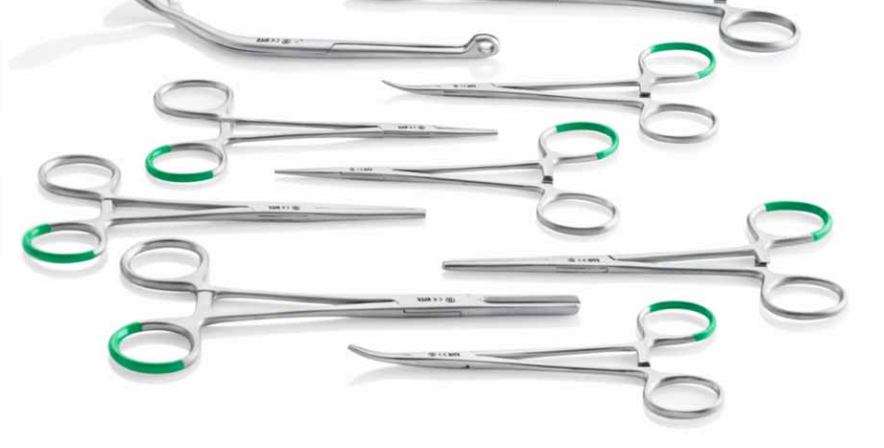
Clamps
The clamps category includes medical clamps in various designs for fixing, guiding and closing tissue, tubes and instruments. They support diagnostics, interventions and the safe handling of materials and provide precise Functionality, easy cleaning and reliable handling in everyday medical practice.
0 Products
filterNo products found
Use fewer filters or delete all of them
Clamps
Areas of use and fields of application
Clamps are used in a variety of ways in everyday medical life: for stopping bleeding, for temporary vascular or tissue control during procedures, for fixing cannulas or probes and for securely connecting electrodes and tubes. Typical application situations include examination, diagnostics, therapy, hygienic security of drainage systems and the organized cable routing of diagnostic devices.
Product types and variants
Various designs can be found in the category, including fine arterial clamps (Mosquito), medium-sized Kocher/Rochester clamps, alligator or bulldog clamps for fixation, as well as insulated clamps for electrophysiological applications. The range also includes clamping pliers with straight or curved jaws, disposable clamping aids and cable or hose clamps.
- Arterial clamps (e.g. Mosquito)
- Kocher/Rochester clamps
- Alligator and Bulldog clamps
- Insulated electrode clamps
- Disposable and reusable clamping aids
Materials, quality and maintenance
Clamps are usually made of stainless steel or are insulated to prevent electrical conductivity. High-quality surface treatments increase corrosion resistance and simplify cleaning and sterilization processes. Reusable models are designed to be autoclavable; Disposable versions reduce the risk of infection and make hygienic processes easier.
Benefit in the workflow
The targeted use of Clamps increases safety during procedural procedures, reduces blood loss, enables controlled fixation and improves the organization of tubes and lines. By selecting the right size and texture, processes can be made more efficient and handling can be optimized in situations where space is limited.
Brands and availability
Solutions from manufacturers like B. Braun, Aesculap and Heine are examples of different levels of precision and equipment variants. The selection ranges from fine hemostats to robust fixation clamps, so that there are suitable options for different user scenarios.