
Manganese
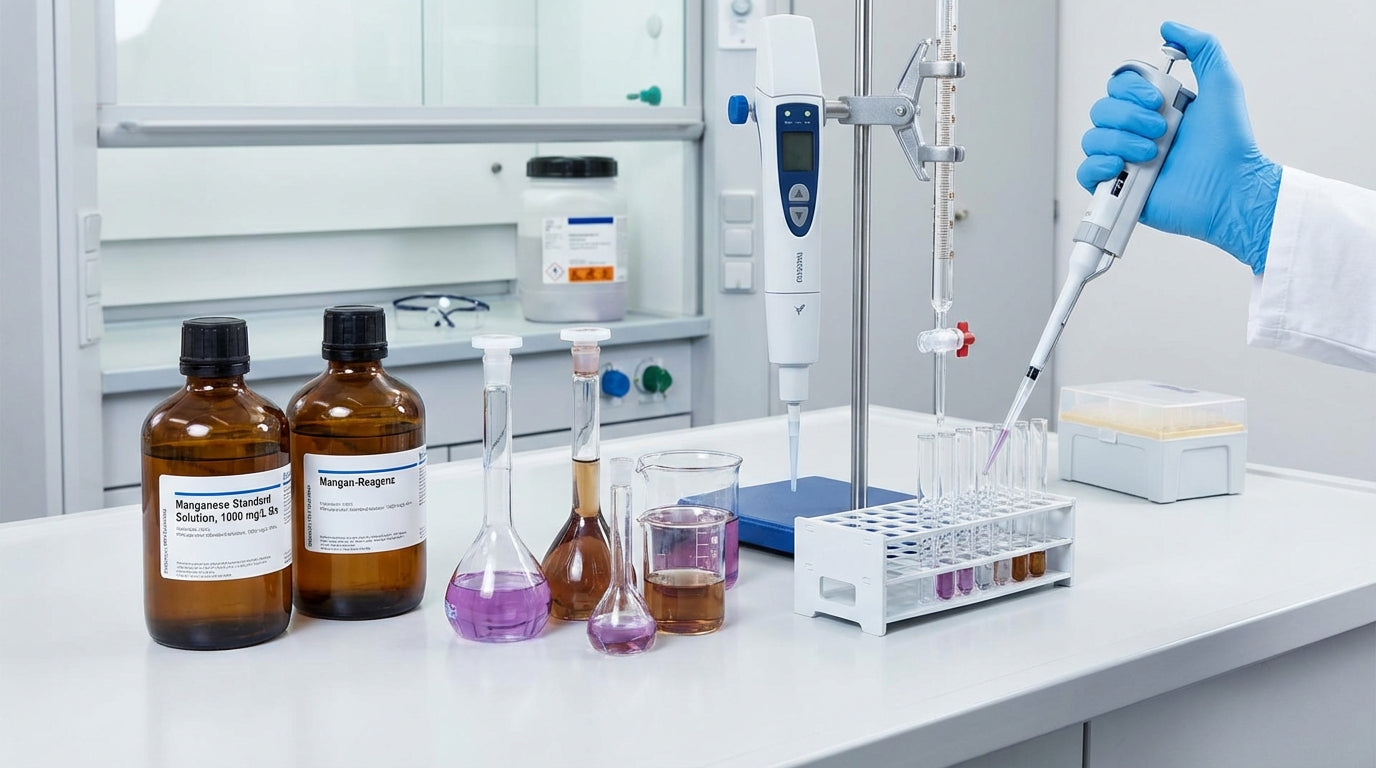
The manganese category includes reagents, calibration solutions and laboratory consumables for determining and monitoring manganese concentrations as well as associated testing and measuring devices. The products support analysis and quality assurance processes and provide a reliable basis for laboratory and practice processes through precise measurability and standardized procedures.
0 Products
filterNo products found
Use fewer filters or delete all of them
Manganese
Areas of use and application areas
Manganese-Products in medical and laboratory areas are used for precise sample preparation, as reagents in analytics and to support technical processes. Typical application situations include chemical analysis, calibration and validation processes, the preparation of reagent solutions and the safe handling of oxidizing substances. The products contribute to standardized documentation and reproducible results in routine examinations and special analyses.
Product types and typical features
The category includes various dosage forms and article types that are designed for laboratory and practice needs. These include concentrated reagents, standardized solutions, measuring and dosing aids as well as suitable consumables for safe handling and storage.
- Reagents and chemical standards
- Pre-dosed solutions and concentrates
- Measuring and dosing devices for precise volumes
- Secure containers and storage solutions
- Protective equipment for handling and disposal
Advantages in everyday working life
Products around Manganese are designed to ensure precise measurement results, reliable reproducibility and safe work processes. Standardized solutions reduce sources of error in sample preparation, optimized packaging and dosing systems save time and minimize contamination risks. Additional consumables and safety containers support hygienic processes and compliant disposal.
Safety and quality aspects
When handling reagents containing manganese, safe storage, correct dosing and suitable protective measures are crucial. Labels, material data sheets and tested packaging are important quality features that facilitate safe use. Laboratory and practice-relevant instructions on handling and disposal should always be observed in order to meet occupational safety and environmental requirements.
Selection criteria and advice points
When choosing Manganeseproducts, the degree of purity, concentration, packaging size and compatible dosing systems are crucial. Documentation, batch identification and availability of safety data sheets are also relevant. Matching accessories such as measuring pipettes, protective equipment and approved disposal containers round off the practical equipment.