
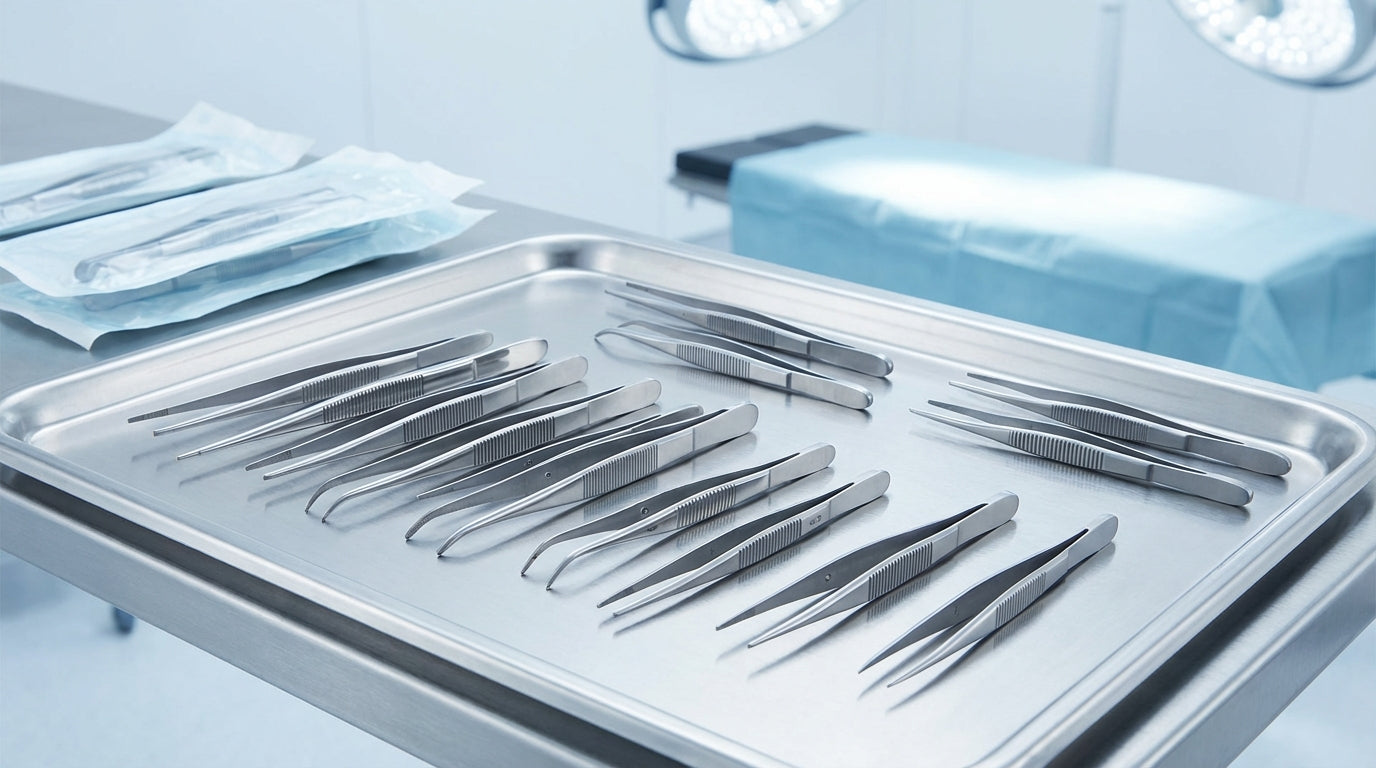
Medical tweezers
The category includes surgical, anatomical, and microsurgical forceps as well as models available in sterile and non-sterile versions for various applications. They enable safe grasping, placement, and removal of materials and support diagnostics, treatment, organization, hygiene, and safety through precise handling and durable construction.
0 Products
filterNo products found
Use fewer filters or delete all of them
Medical forceps
Areas of application and areas of application
Medical forceps are versatile precision instruments for examination, wound care, surgical procedures, therapy and hygienic handling. They are used to grip, place and remove small foreign bodies, to hold drains or sutures and to atraumatically manipulate tissue during diagnostic and therapeutic measures. In routine processes, they support efficient processes for dressing changes, laboratory work and in sterile areas.
Product types and properties
This category includes various designs and designs, including anatomical and surgical forceps, splinter or eye forceps, straight and curved models as well as fine-toothed or atraumatic versions. Choice of material and surface treatment (stainless steel, stainless, polished or matt) influence sterilizability, corrosion resistance and grip. Additional features include knurled or grooved handles, insulated styles and various lengths for specific applications.
- Surgical forceps (straight/curved)
- Anatomical forceps with atraumatic tip
- Fine splinter/dermal tweezers
- Special tweezers for laboratories and diagnostics
Safety, hygiene and sterilization
Hygienic requirements are met by sterile packaged or autoclavable tweezers. Smooth surfaces and high-quality alloys make cleaning easier and reduce the risk of contamination. Choosing the right tweezers contributes to safe handling and supports standardized workflows in sterile and non-sterile areas.
Advantages in everyday practice
Medical tweezers increase precision and efficiency: fine tips enable gentle tissue manipulation, robust constructions ensure a long service life, and ergonomic handles reduce fatigue during repetitive movements. The availability of different lengths and tip shapes means the tool can be optimally adapted to specific applications.
Selection criteria
Sterilizability, material quality, tip shape and length play a central role in the selection. Additionally, durability, manufacturer quality seals and compatibility with existing sterilization processes should be taken into account. The right tweezers improve processes during examinations, wound care and laboratory work alike.